
 Buy & Sell
 All EV Sales
 Explore
 Account
 Back to News
 The global landscape for electric vehicles (EVs) is changing at an unprecedented pace. From Tesla’s rocky period of slowing sales to the rise of new players in infrastructure, technology, and manufacturing, a fresh wave of energy is sweeping through the EV ecosystem. A snapshot of recent industry highlights shows how varied and dynamic the sector has become — stretching far beyond just cars, and into ships, chips, and urban infrastructure.
Tesla’s Decline and Brand Reputation Challenges
Once untouchable in the electric car space, Tesla’s reign as the symbol of EV innovation may be softening. Reports reveal that Tesla’s global EV sales in 2025 declined by more than 140,000 units, marking what some analysts call a ‘peak Tesla’ moment. The contraction has been sharpest in Europe, where strong competition, brand fatigue, and consumer sentiment shifts are taking their toll. The company’s mystique—built around speed, performance, and technological daring—now faces pressure from a maturing market and more affordable, equally capable alternatives from China and Korea.
As Tesla navigates these challenges, its founder’s increasing political involvement and polarizing public persona appear to be impacting public trust. Market observers suggest that, while Tesla still leads in software capability and infrastructure, the broader EV ecosystem no longer revolves solely around Silicon Valley.
Legacy Fuel Retailers Pivot to Electric
The transition away from fossil fuels is forcing even longtime petrol retailers to adapt. Australia’s largest fuel provider recently unveiled its first EV charging bays specifically designed for trailers—an acknowledgment that electric mobility isn’t just about passenger cars. The new 400kW fast chargers and drive-through setup are the first of their kind in the region, aimed at serving heavy-duty and towing-capable EVs on key motorway sites. This move signals that the infrastructure supporting EV growth must evolve just as much as the vehicles themselves.
For the average driver, this means faster charging, less queueing, and a growing sense that electric driving can integrate seamlessly into everyday travel.
Beyond the Road: Electric Ships Take to Water
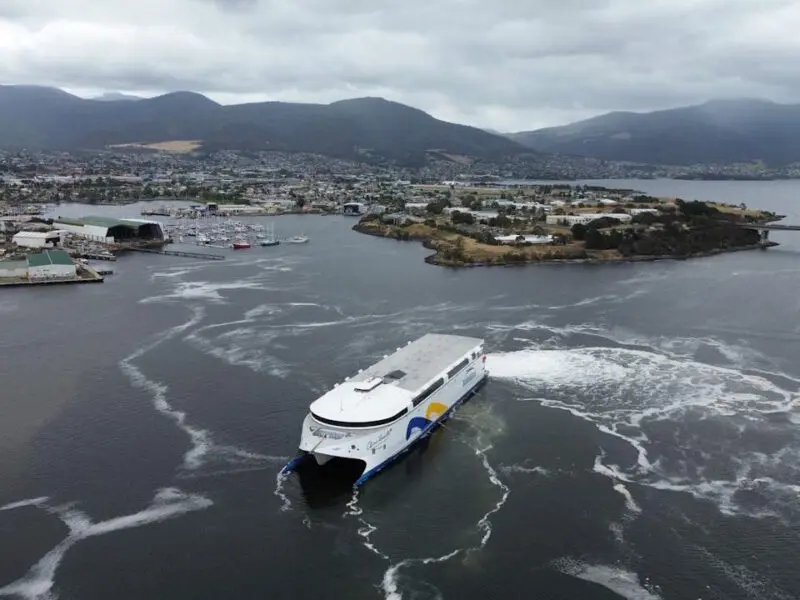
Perhaps one of the most exciting expansions of electric propulsion is happening at sea. Australian shipbuilder Incat Tasmania has launched harbour trials for what is now recognized as the world’s largest battery-electric ship. The massive vessel, designed for both performance and sustainability, represents a bold new direction in maritime engineering. It underscores how decarbonization is touching every layer of transportation—not just personal or commercial road travel. If the trials succeed, it may become a blueprint for how the shipping industry reduces emissions in global ports.
A Broader, More Diverse EV Market
While Tesla’s sales may have slowed, its product lineup continues to evolve. The automaker has released a bigger, six-seat version of the Model Y in new international markets ahead of its Australian arrival. With captain’s chairs, expanded interior space, and subtle design tweaks, it opens a new niche for families seeking comfort alongside efficiency. Complementing that, a refreshed interior upgrade for the Model Y includes a larger central display and improved ergonomics — showing Tesla’s commitment to maintaining a competitive edge in user experience.
Meanwhile, other brands are rapidly catching up. Kia’s highly anticipated EV4 has debuted with pricing and specifications highlighting what may be the company’s longest-range vehicle yet. Offering practicality and affordability, the EV4 is expected to hit the Australian market soon, signaling Kia’s strategic expansion in the midrange EV category.
Chinese automaker Zeekr is also making its play with the newly revealed 7GT — a sleek electric wagon poised to undercut its popular 7X SUV counterpart. This marks another push by Chinese manufacturers into the European and Australian markets, blending cutting-edge design with price points that are difficult to ignore.
Entry-Level Electric Cars and the Battle for Affordability
At the budget end of the spectrum, BYD, a fast-rising EV manufacturer, has unveiled its smallest and cheapest model yet — the BYD Atto 1. Early test drives show that this compact hatchback could redefine what affordable EVs can do, offering remarkable value and efficiency without sacrificing quality. With price and practicality at the core of its positioning, BYD’s approach could dramatically widen the entry point for Australian buyers contemplating their first electric vehicle.
Meanwhile, Tesla continues to work on its own low-cost alternative. Production of Tesla’s most affordable model reportedly began in Shanghai, aimed at Asian markets and potentially heading to Australia. If true, this could prove pivotal in reclaiming value-conscious consumers and fending off competition from East Asian brands.
Technology at the Core: Tesla’s AI5 Chip Nears Completion
Amid product diversification and competition, Tesla hasn’t stopped innovating technologically. Elon Musk recently confirmed that the company’s next-generation ‘AI5’ chip design is almost finished and promises up to 50 times greater performance than current iterations. This hardware leap is central to Tesla’s future self-driving capabilities, underpinning both automotive and robotics ambitions. Even as its market share fluctuates, Tesla’s influence on the next generation of AI-driven mobility remains strong.
A Market in Transformation
What binds all these developments together is a clear narrative: the EV revolution is no longer confined to one company or region. It’s a globally distributed movement connecting automakers, energy providers, and even shipbuilders under a shared vision of decarbonized mobility. Tesla may be facing a rough chapter, but competition is catalyzing more innovation than ever before.
The EV market is now defined by diversity—of products, price points, and technologies. From family SUVs to next-gen chips, and from trailer-ready chargers to electric ships, the transformation of transport is rolling ahead with unstoppable momentum.
All EV Sales Research Team
1/20/2026