
 Buy & Sell
 All EV Sales
 Explore
 Account
 Back to News
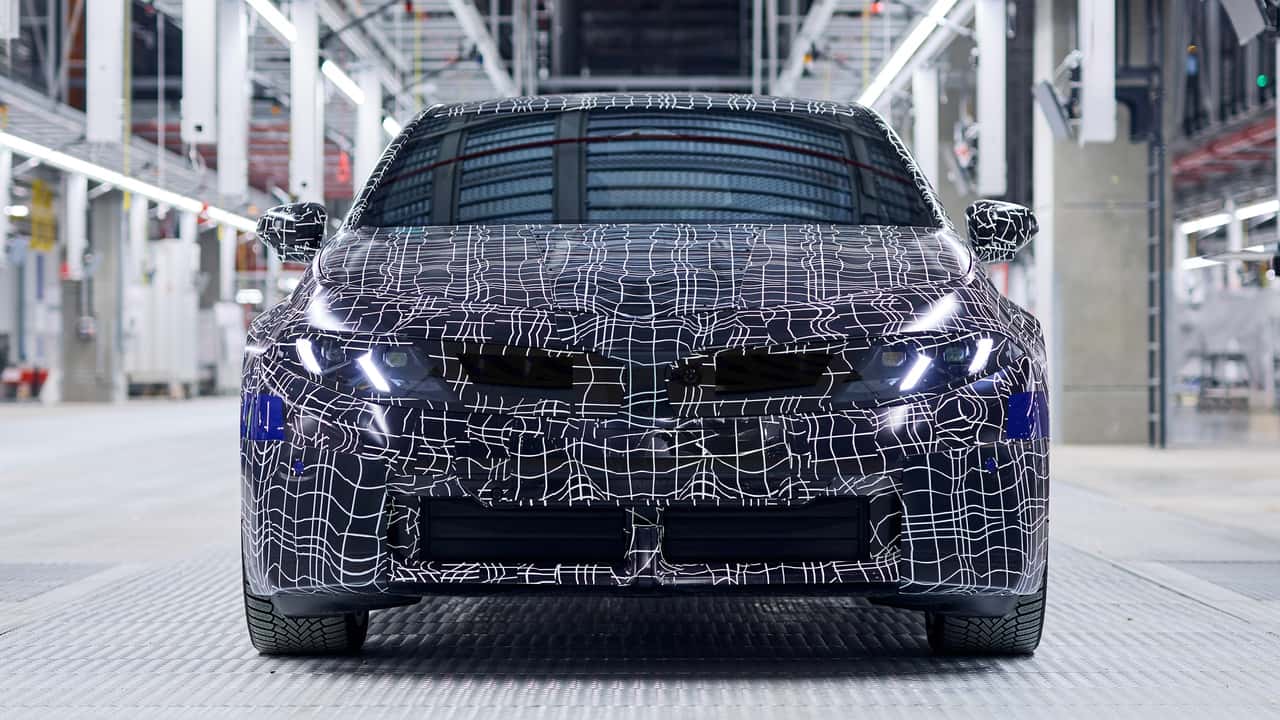
 BMW is preparing to redefine one of its most storied nameplates for the electric age. The German automaker confirmed that the legendary 3 Series sedan—long the benchmark for compact sports sedans—will move into its next generation as a fully electric model built on the brand’s new Neue Klasse platform. And yes, the name is official: BMW is bringing back the i3 badge, this time for a sleek four-door sedan instead of the quirky, carbon-bodied hatchback that debuted the company’s first major EV push a decade ago.
Unlike the outgoing i3 city car, which was a bold but niche experiment, this upcoming i3 sedan is designed to be a mainstream cornerstone of BMW’s lineup. In effect, it represents how the company intends to fuse performance heritage, modern design, and next-generation electric technology into one of its most recognizable vehicles.
A New Platform for a New Era
The Neue Klasse architecture underpins BMW’s latest EV projects and signals a foundational shift in the company’s strategy. It’s the same structure underpinning the next-generation iX3 SUV, and it allows BMW engineers to build vehicles that are designed as EVs from the ground up rather than modified from combustion platforms like the current i4 or i5. That means better packaging, improved efficiency, and a design that’s not constrained by legacy proportions.
BMW’s sixth-generation eDrive system will play a leading role in this transformation. The brand claims that the new hardware will deliver 30 percent more range, charge 30 percent faster, and operate 25 percent more efficiently than current setups. The powertrain will run on an 800-volt electrical system—a significant step up from earlier BMW EVs—allowing ultra-fast DC charging rates that could exceed 400 kilowatts. It will also use new cylindrical battery cells that are more energy dense and compact, enabling lower floor height and improved performance.
Powertrain and Range Expectations
The Neue Klasse platform supports configurations with anywhere from one to four electric motors, producing outputs ranging from roughly 268 horsepower up to a staggering 1,341 horsepower. The upcoming i3 sedan is expected to launch with single-motor rear-wheel-drive and dual-motor all-wheel-drive options, offering a balance of performance and efficiency. Enthusiasts are already speculating about versions named i320, i330, and i340—names that align with BMW’s internal combustion naming conventions but flipped into the EV future.
BMW is targeting more than 300 miles of driving range on a full charge, bringing it into direct competition with similarly sized rivals like the Tesla Model 3 and the soon-to-arrive electric Mercedes-Benz C-Class. Combined with the 800-volt system’s rapid charging capability, BMW’s promise of quick rest stops could make long-distance travel more practical than ever for a sports sedan.
Design: A Return to Simplicity
The company has already teased the new direction with its Vision Neue Klasse concept, which previewed many of the design cues that will define this new generation. Expect a return to cleaner, more timeless design forms after years of controversial styling choices. Trademark BMW elements such as the Hoffmeister Kink will remain, but the oversized kidney grilles that dominated recent models are set to shrink or possibly disappear altogether, replaced by more understated styling that emphasizes aerodynamic efficiency.
Proportionally, the i3 sedan should maintain the classic three-box silhouette that defined the 3 Series lineage, ensuring continuity despite the transition to electric power. According to industry reports, coupe and wagon versions may follow later, extending the i3 family into body styles BMW fans know well.
Interior and Technology
Inside, BMW is taking an innovative approach. Expect a mix of minimalism and advanced digital interfaces, including an augmented reality display that projects navigation and vehicle data directly onto the windshield. A full-width digital dashboard, reminiscent of newer designs from other luxury automakers, is also expected. Sustainability will play a strong role in material selection, with more recycled and eco-conscious components throughout the cabin.
Driving Toward the Future
BMW has not revealed official pricing yet, but informed estimates suggest a base price near $50,000. The current combustion 3 Series starts around $45,000, and the i4 begins just over $52,000, so the new i3’s positioning would make sense right between them, especially considering its upgraded technology.
BMW is already building prototype versions of the all-electric 3 Series at its Munich plant, and full-scale production is slated to ramp up in the second half of 2026. If that timeline holds, the electric i3 sedan should make its public debut as a 2027 model, marking one of the most significant transitions in BMW’s history.
The significance of this launch extends far beyond one model line. For decades, the 3 Series has embodied BMW’s engineering ethos—a blend of practicality, sportiness, and refinement. With the forthcoming i3, BMW isn’t just electrifying a car; it’s redefining what it means to build the “ultimate driving machine” for a generation that values sustainability as much as speed. If early indications are accurate, the electric 3 Series could once again set the benchmark for premium compact sedans, this time powered entirely by electrons rather than gasoline.
All EV Sales Research Team
3/5/2026