
 Buy & Sell
 All EV Sales
 Explore
 Account
 Back to News
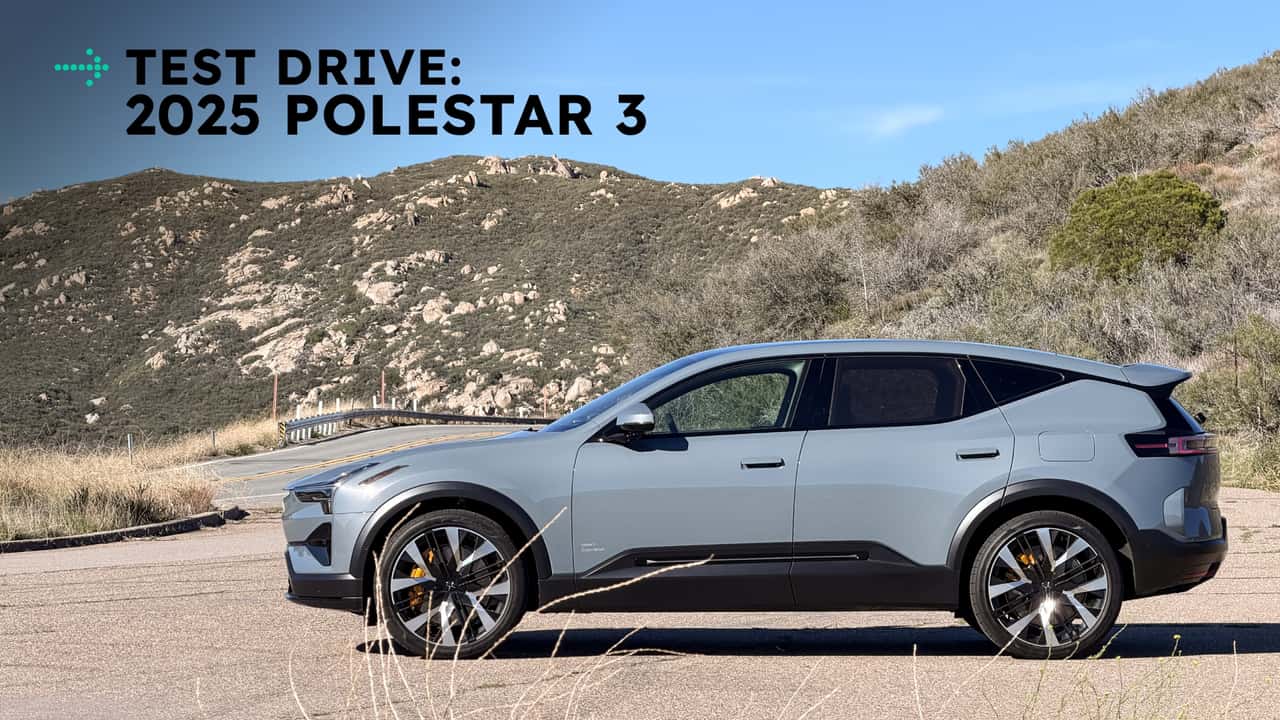
 Lately, the luxury SUV market has become obsessed with blending opposites. People want a vehicle that’s as comfortable and capable as a limousine, yet as fast and agile as a supercar. That’s an almost impossible balance to strike. The modern high-performance SUV often ends up being a 5,000-pound mix of brute force and compromise, trying too hard to be everything at once. But the Polestar 3 may be the first one that nearly pulls it off.
The Quest for the Ultimate Super-SUV
From Lamborghini’s Urus and Mercedes-AMG’s GLE 63 S, to Bentley’s Bentayga and Porsche’s Cayenne, automakers have been working tirelessly to deliver performance vehicles that defy physics. They want these large machines to handle like lightweight sports cars, while maintaining the practicality and comfort of an SUV. Each has made valiant attempts, but they still face an inevitable truth of science: a tall, heavy vehicle will never corner like a sedan.
SUVs sit higher off the ground, placing more weight farther from the pavement. This increased mass and elevated center of gravity make them less nimble. Engineers can try to mask these traits with big engines, stiff suspensions, or active anti-roll systems, but at the end of the day, gravity wins.
What Makes the Polestar 3 Different
The Polestar 3, built on an electric platform, benefits from its EV architecture in ways gasoline rivals can’t match. Its battery pack sits low to the ground, spreading weight evenly between the axles. This gives the SUV a more balanced posture and stable handling profile. Even though it’s heavy by the scales, that weight is in the right place, allowing it to corner with confidence and precision.
The dual-motor setup delivers 517 horsepower and 671 pound-feet of torque in its Performance Pack configuration—figures that might seem modest compared to the 600-horsepower beasts from BMW and Mercedes. But the Polestar’s power delivery is immediate and consistent, offering effortless thrust without the drama or lag of a turbocharged engine. It’s not about numbers alone; it’s about balance. The Polestar doesn’t chase outrageous speed for its own sake. Instead, it aims for harmony between power, poise, and comfort.
A More Natural Driving Experience
Unlike its over-engineered competitors, the Polestar 3’s setup feels organic. The ride quality remains supple thanks to an adaptive two-chamber air suspension system that can adjust seamlessly across surfaces. When the road twists, the torque-vectoring rear axle actively balances grip and control, allowing the SUV to pivot smoothly through corners without the top-heavy sensation that plagues most of its rivals.
Many traditional super-SUVs rely on stiff setups or active technology to counteract body roll, resulting in detached or unpredictable handling. The Polestar feels more transparent. You sense its movements, anticipate its reactions, and find confidence in its predictability. It’s not flash for flash’s sake—it’s coherent engineering expressed through a calm yet powerful demeanor. This makes it a genuinely engaging vehicle on winding roads, not simply a missile in a straight line.
Power Without Excess
The great irony in modern high-performance SUVs is that they often have more capability than the average driver could ever safely use. They thunder from zero to sixty in around three seconds but feel cumbersome the moment a lane curves. The Polestar 3 instead treats power as a partner, not an opponent. Its driving experience encourages smooth momentum rather than raw aggression.
With its electric torque and sophisticated suspension, the Polestar dances through corners where others stomp and heave. It rewards finesse over force. And when the conditions allow—say, on a quiet stretch of snow or a controlled track—it’s more than happy to cut loose, allowing slides that remind you it still knows how to play.
Comfort and Refinement in Everyday Driving
The real revelation, however, comes when the excitement ends and you head home. Around town, the Polestar differentiates itself from the pack completely. It glides over bumps with genuine grace, remaining quiet and serene. There’s no shaking, no harshness, and none of the nervousness that tends to accompany stiffer, high-performance vehicles.
Even luxury competitors struggle here. A Bentley Bentayga may cushion its passengers more thoroughly, but it can’t deliver the same agility in corners. The Porsche Cayenne strikes a good balance, yet it lacks the Polestar’s distinctive character and tranquility. The Polestar’s mix of refinement and athleticism feels more natural, more mature.
Design and Value That Stand Out
Visually, the Polestar 3 distances itself from the noisy aesthetic of its rivals. While the BMW X5 M, the Mercedes-AMG GLE 63, and the Urus scream for attention with exaggerated lines and vents, the Polestar adopts minimalism without slipping into anonymity. Its crisp lines and uncluttered surfaces project quiet confidence. It’s understated but magnetic—something that looks equally suitable carving through switchbacks or idling at a hotel valet.
Then there’s the cost advantage. A fully equipped Polestar 3 runs around $93,000, which is not cheap but still significantly lower than what comparable gas-powered super-SUVs demand. Cars like the X5 M and GLE 63 S start well above $130,000, while a similarly optioned Cayenne or Bentayga can soar deep into six-figure territory.
The Almost-Perfect Super-SUV
On paper and on the road, the Polestar 3 has managed to do what its gasoline rivals have struggled to achieve: deliver power and precision without punishing comfort or inflating cost. It strikes a thoughtful balance between excitement and elegance, between capability and composure.
And yet, its biggest challenge may lie beyond its driving dynamics. While the Polestar nails everything about performance and ride quality, questions remain about its overall user experience and features off the road. Still, when it comes to motion, emotion, and everyday usability, the Polestar 3 sets a new benchmark for electric SUVs—a rare machine that truly earns both halves of its personality.
All EV Sales Research Team
3/20/2026