
 Buy & Sell
 All EV Sales
 Explore
 Account
 Back to News
 Electric Horizons: How the Latest EV Advances Are Shaping a New Transportation Era
The electric mobility industry continues its march toward mainstream dominance in 2026, driven by an ever-quickening rhythm of innovation, investment, and geopolitical necessity. The latest headlines from across the electric vehicle (EV) world paint a vivid picture of progress — one defined by staggering funding rounds, surging competition in every market segment, and leaps forward in both manufacturing capacity and self-driving technology.
From Europe’s waterways to global roads and futuristic robo-taxi fleets, electrification is no longer a question of if or when — but how fast.
Candela’s Hydrofoils Take Flight – Again
Swedish electric boat manufacturer Candela has secured a fresh €30 million in funding to expand production of its innovative hydrofoil ferries. The investment comes as demand for sustainable marine transport rises. These ultra-efficient vessels literally lift off the water, reducing drag and energy consumption by nearly 80 percent compared to conventional boats. Candela’s new capital infusion will help build a second manufacturing facility, enabling the company to scale up production to meet orders from ports and cities worldwide seeking zero-emission transit solutions.
In a sector that has long lagged behind electrification due to battery weight and range constraints, Candela’s success highlights how intelligent design and aerodynamics can revolutionize even the most entrenched industries.
Tesla’s Cybercab Enters Production
The iconic angular design of the Tesla Cybercab — a vehicle that bridges the gap between the ultra-durable Cybertruck and the robotaxi of tomorrow — has made its first appearance on the production line in Texas. Images from Tesla’s factory hint that full-scale production could begin within weeks. The Cybercab represents a linchpin in Tesla’s long-term autonomous strategy, coinciding with growing anticipation of the company’s self-driving software rollout in global markets.
With this moment, the future of ride-hailing — once speculative and confined to concept renderings — is inching closer to production reality.
Uber and Rivian Join Forces for Autonomous Fleets
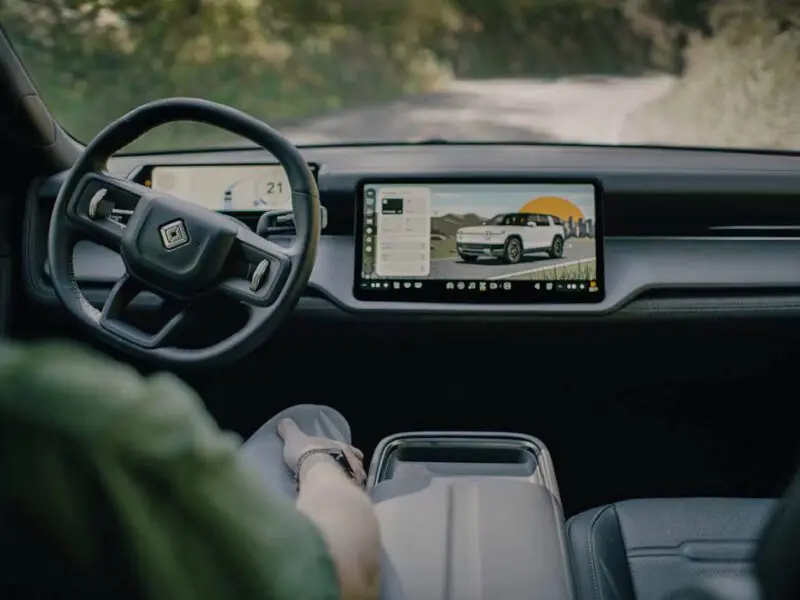
Smaller headlines rarely echo as loudly as this one: Uber has pledged up to $1.25 billion in investment toward Rivian. The collaboration aims to deploy up to 50,000 fully autonomous R2 robotaxis worldwide. This partnership fuses Uber’s expertise in fleet logistics and data-driven mobility management with Rivian’s manufacturing prowess and EV innovation.
Should it succeed, this could redefine the intersection of ride-sharing and clean energy transport. With 50,000 self-driving vehicles on the streets, urban transport emissions could drop dramatically — and human drivers might one day share the road with intelligent, electric, driverless counterparts in growing numbers.
Tesla’s FSD Supervised Nears European Approval
Meanwhile, Tesla’s Full Self-Driving (FSD) Supervised system has taken another major step. The company has clocked more than 13,000 test rides throughout Europe, and regulatory approval now seems within reach. If validated, this would mark a watershed moment: the first wide-scale approval of “supervised” autonomy on the continent. It’s a vital precursor to Tesla’s autonomous ride-hailing network aspirations and a benchmark for all companies vying to prove safety and compliance.
BMW’s 900 km i3 Sedan Redefines Range Expectations
BMW has stunned the industry with the world premiere of the new i3 electric sedan, offering a game-changing 900-kilometre WLTP range and 400 kW fast charging capability. While European automakers often find themselves battling the likes of Tesla and BYD on pricing, BMW’s new entry seeks dominance through unprecedented efficiency and long-range capability. This milestone further blurs the line between electric convenience and combustion-era practicality.
Chinese EVs Surpass Toyota in Australia
In Australia, market dynamics are shifting rapidly. A recent report highlights that Chinese automakers are outselling Japanese carmakers, signaling a fundamental reshaping of consumer trust and brand dominance. Once considered budget alternatives, Chinese EVs are now leading in value, technology, and design — combining accessible pricing with competitive performance. Even iconic players like Toyota are facing pressure to accelerate their electrification strategy.
Polestar’s Carbon Accounting Sets a New Benchmark
As electric car production scales up, so does scrutiny over the environmental cost of manufacturing. Polestar’s new carbon footprint report provides rare transparency, examining every gram of emissions from its Polestar 5 four-door GT — covering materials, manufacturing, battery production, and logistics. This cradle-to-gate assessment underscores a growing truth: sustainability isn’t just about zero tailpipe emissions, but also about responsible sourcing and production.
Polestar’s effort may push other automakers toward full life-cycle disclosures, building consumer trust in a more holistic definition of sustainability.
Supercharging Gets a Boost — Literally
Tesla’s Supercharger network continues to evolve. The company is now phasing out its 250 kW cabinets, pivoting exclusively toward 500 kW V4 units. This shift doubles the maximum power output, supporting faster charging for new-generation vehicles — including potential integration with electric trucks. For long-distance travelers, this could mean shorter stops and denser charging infrastructure as the global network expands.
EVs Cut Oil Demand on a Global Scale
A recent analysis reveals that the global electric vehicle fleet in 2025 displaced oil consumption equal to 70 percent of Iran’s annual exports. As global tensions continue to revolve around energy markets, electric transport is quietly reshaping geopolitical dependencies. What was once a climate initiative has become a cornerstone of energy security.
This revelation offers perspective: as EV adoption accelerates, the world’s vulnerability to fossil fuel supply shocks recedes. In each battery, there lies a small act of resilience.
The Road Ahead
The electric mobility revolution is now touching every layer of the global economy — cars, ferries, factories, and even energy trade. Emerging technologies are broadening what it means to travel cleanly and efficiently, while fresh capital fuels rapid transformation. From Candela’s boats skimming the Stockholm archipelago to Tesla’s robotaxis preparing to roam city streets, one unifying thread runs through all these developments: motion without combustion.
The pace of change is accelerating, but so is our capacity to imagine a cleaner, smarter, more autonomous future on the move.
All EV Sales Research Team
3/23/2026