
 Buy & Sell
 All EV Sales
 Explore
 Account
 Back to News
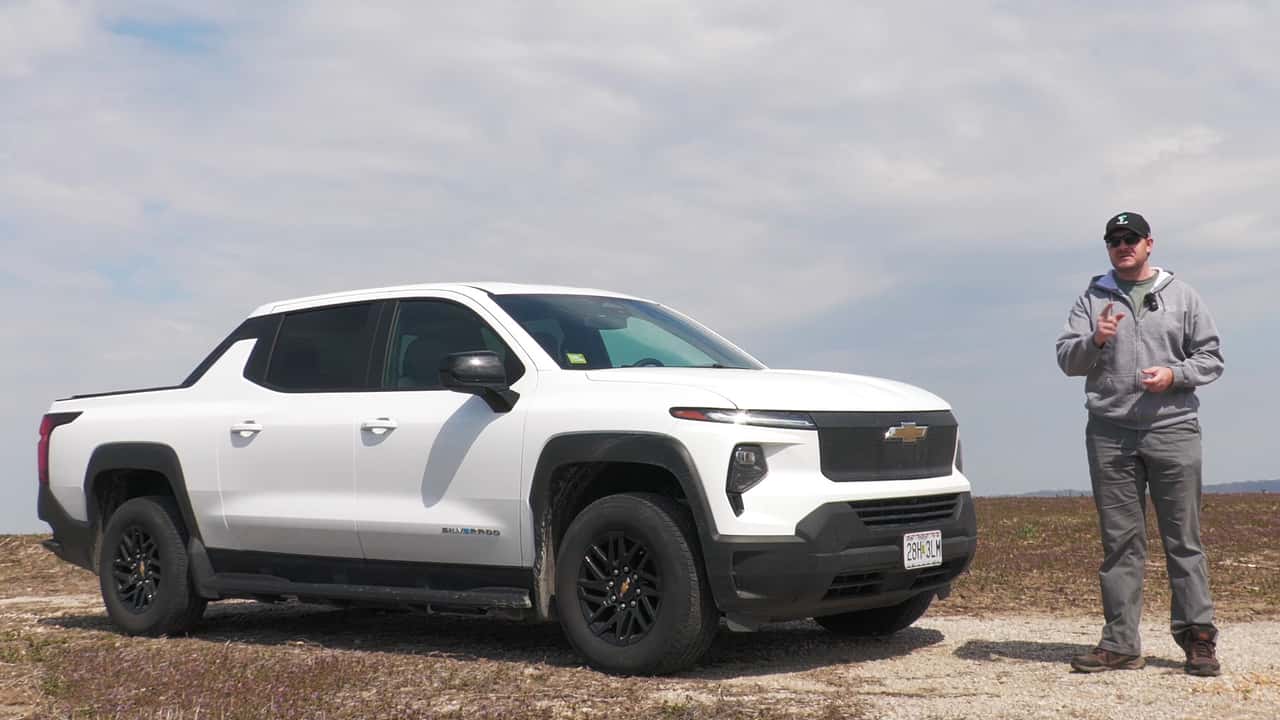
 After a year of ownership and multiple trips to the dealership, YouTuber Robert Dunn — known for his automotive channel Aging Wheels — has decided to let go of his Chevrolet Silverado EV. Despite being impressed by the truck’s capabilities and performance, ongoing service headaches and high insurance costs ultimately pushed him to take this step.
A Promising Start with a Powerful Truck
At first, the Silverado EV seemed like the perfect addition to Dunn’s garage. As an enthusiast with a deep appreciation for both classic and electric vehicles, he was drawn to the Silverado’s mix of cutting-edge technology and raw utility. The version he owned was the Max Range model, equipped with one of the largest batteries on the market—over 200 kilowatt-hours of energy capacity—and an EPA-rated range of roughly 478 miles. This, combined with its robust towing ability, made it a standout among electric trucks.
Dunn praised the Silverado EV for its towing performance in particular. When pulling heavy loads over long distances, the truck’s regenerative braking system worked flawlessly, providing smooth control on descents and feeding energy back into the large battery pack. He noted that the brakes rarely overheated, a significant advantage for anyone towing over mountainous routes. Daily driving comfort and charging performance, at least under normal circumstances, also received high marks from him.
Reliability Problems Begin to Surface
The Silverado EV’s impressive technical abilities couldn’t make up for the reliability woes that followed. Over the span of a year, Dunn had to bring his truck to a dealership six times. The first few visits were relatively minor: a dim LED daytime running light, a broken wiring harness right from the factory, and a handful of software glitches that were eventually sorted out with updates. These issues were irritating but fixable.
The real frustration came from a lingering problem that appeared during a cross-country road trip. Dunn found that his Silverado EV would not charge at full speed when plugged into DC fast chargers. Instead of rapidly replenishing the sizable battery, the truck was stuck in a slow-charging mode, prolonging wait times by hours.
The Battery’s Complex Setup
Understanding why this fault was so disruptive requires a brief look under the hood—or rather, beneath the battery tray. The Silverado EV Max Range variant features a 24-module battery pack cleverly designed to balance cost and performance. Normally, its two battery sections are wired in parallel, operating at 345 volts. This setup is cost-effective because it allows GM to use more conventional hardware, including lower-voltage motors.
However, when the truck is connected to an 800-volt DC fast charger, a built-in system automatically switches the configuration so the battery modules operate in series. This effectively doubles the voltage to about 691 volts, which cuts charging time significantly. When everything works properly, the Silverado EV can handle over 300 kW of charging power, letting owners add hundreds of miles of range in roughly half an hour.
In Dunn’s case, that switch wasn’t activating. The system stubbornly stayed in its lower-voltage mode, forcing him to wait over five hours each time he needed a full charge on the road. Understandably, this made long trips much more difficult and put the practicality of the truck into question.
Service Struggles and a Self-Fixing Mystery
When Dunn brought the problem to his local dealership, technicians were stumped. On his first visit, they simply cleared the fault codes, assuming it was a temporary glitch. The issue persisted. A second visit resulted in a longer diagnosis period—nearly two months—before the problem seemed resolved. But only a week after getting the truck back, the same slow-charging behavior returned.
After a third dealership visit that lasted another month, the technicians admitted they didn’t know how to proceed. Then, bizarrely, the truck repaired itself without any intervention. The charging speeds returned to normal as if nothing had been wrong in the first place.
Dunn later explained that the problem might stem from the car’s software failing to log the issue properly. Since no error code was being recorded, the technicians had nothing to go on. Without a diagnostic trail, even experienced EV specialists were left to guess. This lack of fault reporting may have been the main reason the dealership couldn’t fix the issue through conventional means.
The Breaking Point
Although the Silverado EV was now behaving normally, Dunn’s trust in the vehicle—and the ownership experience—was shaken. His attempts to initiate a buyback were denied by Chevrolet, as the issue had seemingly resolved itself. On top of months spent waiting for repairs, his insurance premiums were exceptionally high, adding another layer of financial frustration.
After everything, Dunn acknowledged that the service technicians were doing their best and didn’t hold any personal animosity toward them. Yet the repeated downtime and uncertainty ultimately outweighed the joy of owning such a capable truck. As a result, after one year and six service appointments, he decided it was time to move on.
Dunn’s experience highlights the growing pains some owners face as electric vehicles become more complex. His Silverado EV remains a powerful piece of engineering, but the challenges he faced underscore a broader truth: when cutting-edge tech meets traditional service networks, even the best machines can become difficult to live with.
All EV Sales Research Team
4/2/2026