
 Buy & Sell
 All EV Sales
 Explore
 Account
 Back to News
 Global EV Momentum: 2024 Ushers in a New Era of Mobility
The electric vehicle (EV) ecosystem is evolving at a record pace in 2024, driven by manufacturing advancements, fresh policy frameworks, and consumer enthusiasm for sustainable transport. Across the globe, automakers are scaling up production, governments are establishing firmer zero-emission goals, and infrastructure providers are racing to close the charging gap. The transformations underway signal that EVs are moving from niche adoption to mainstream dominance.
Production Growth and Market Outlook
In the first half of 2024, global EV sales climbed more than 35% compared to the same period in 2023. This surge comes on the back of expanding model lineups, price competition, and battery cost reductions. Several major auto manufacturers announced multi-billion-dollar investments into new EV production facilities, especially in North America, Europe, and parts of Asia. These plants are designed to meet growing demand while localizing battery supply chains to reduce geopolitical risk.
Emerging automakers from countries such as China and India are also entering international markets aggressively. They are introducing affordable EVs with competitive range and performance, thereby increasing pressure on legacy brands to accelerate their electrification roadmaps. Analysts now predict that global EV penetration could reach 25% of all new car sales by the end of 2025, well ahead of earlier forecasts.
Innovations in Battery Technology
A major driver behind the EV revolution continues to be rapid progress in battery technology. Solid-state batteries, though still in early commercialization stages, have taken a large step forward in 2024. Several leading research partnerships are reporting early pilot production lines capable of delivering higher energy density with improved safety profiles compared to conventional lithium-ion chemistries.
At the same time, efforts to secure sustainable battery materials are intensifying. Recycling initiatives are scaling up, with new facilities able to recover lithium, nickel, and cobalt at high purity rates. Governments and private firms are also trying to diversify sourcing strategies by developing localized supply of critical minerals. These measures support both environmental goals and supply-chain stability.
Charging Infrastructure Expansion
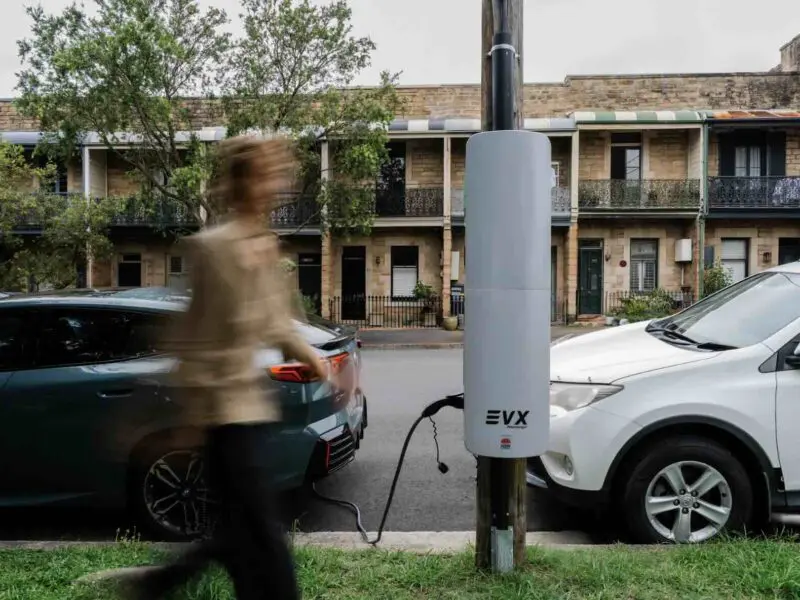
Perhaps the most visible sign of EV growth is the widespread expansion of charging networks. Public charging is extending beyond urban centers to suburban and rural areas, with many utilities actively collaborating to enhance grid capacity. Fast-charging technology is becoming ubiquitous, with newer stations routinely providing 350 kW of power output—enabling drivers to add hundreds of kilometers of range in under 15 minutes.
Despite these improvements, the industry faces ongoing challenges around interoperability and payment standardization. Industry alliances are working on unified communication protocols allowing different charging networks to seamlessly interact. This will eventually translate to smoother user experiences, where drivers can navigate stations from multiple providers through integrated platforms.
Policy and Regulation: Governments Step Up
Government policies remain among the strongest EV accelerants. The European Union’s Fit-for-55 plan and the United States' clean vehicle incentives are encouraging fleet transition and spurring domestic production. Several Asian countries are following suit, establishing their own subsidy mechanisms while building manufacturing ecosystems.
Carbon-neutral goals have also led to stringent emission targets, forcing automakers to overhaul product lines or face heavy penalties. Meanwhile, city-level policies are redefining urban transportation—low-emission zones, free parking for EVs, and electrified bus fleets are increasingly common. Such frameworks help normalize EV ownership while reducing air pollution in densely populated regions.
The Role of Software and Connected Mobility
Beyond physical hardware, 2024 marks a turning point in the digital transformation of the automotive sector. New EV models arrive with enhanced over-the-air update capabilities, adaptive battery management systems, and intelligence-driven route optimization. Artificial intelligence is being applied to predict battery degradation, plan efficient charging stops, and even analyze driver habits to improve range efficiency.
Vehicle-to-grid (V2G) technology is gaining commercial traction as well. By allowing EVs to discharge energy back to the grid during peak demand, they serve as flexible storage units in emerging renewable energy ecosystems. Pilot programs in several countries have demonstrated measurable benefits for grid stability, creating new revenue opportunities for EV owners.
Consumer Experience and Adoption Trends
EV buyers in 2024 are motivated not only by environmental awareness but also by economic considerations. Rising fuel prices, along with falling EV sticker prices and maintenance costs, are making electric mobility a financially sound choice. Lease options, battery-as-a-service subscriptions, and vehicle-sharing models are reshaping how people think about ownership. The variety of available choices—from compact urban EVs to long-range SUVs and electric pickup trucks—means that the market is catering to all demographics.
Car reviews highlight ongoing improvements in driving dynamics, with better acceleration, reduced noise, and updated cabin technologies. The perception of EVs as a luxury or experimental product is fading rapidly, replaced by their identity as mainstream, efficient vehicles suitable for everyday life.
Environmental and Economic Impact
The shift to electric mobility is influencing broader economic patterns. Utilities are redesigning load forecasts to accommodate new demand peaks, while the energy storage industry sees unprecedented opportunity. Renewable energy generation, especially solar and wind, pairs naturally with EV growth, creating a cyclical system of sustainable production and consumption. Moreover, the reduction of oil consumption is beginning to show measurable effects on national import bills.
Environmental impact studies provide encouraging data: reductions in tailpipe emissions are already improving urban air quality, while lifecycle evaluations continue to optimize manufacturing practices to minimize carbon footprints even further.
Looking Forward
As 2024 progresses, the convergence of innovation, policy momentum, and environmental necessity promises to make the next few years decisive for the EV industry. Challenges remain, especially around battery raw materials and electricity-grid modernization, but the overall direction is clear. The EV movement is no longer an alternative—it is rapidly becoming the standard for global transportation. With shared commitment among governments, companies, and communities, the vision of a cleaner, more efficient mobility future is fast turning into reality.
All EV Sales Research Team
5/13/2026