
 Buy & Sell
 All EV Sales
 Explore
 Account
 Back to News
 Hyundai Expands Mobile Service Fleet Across the U.S. to Boost Customer Convenience
Hyundai is taking another major step toward improving customer convenience in the United States by rolling out an expanded program of mobile service vans. This initiative, which began as a limited pilot among select dealers, is now being scaled up nationwide. The automaker aims to have around 150 dedicated mobile service vans operating by the end of the year, bringing vehicle maintenance and repairs directly to customers’ driveways, offices, or wherever is most convenient.
Bringing the Dealership to the Customer
This move signals Hyundai’s growing emphasis on delivering efficient, customer-friendly service solutions. The program operates on a simple premise: instead of requiring owners to travel to a dealership, Hyundai’s skilled technicians will travel to them. Once booked through a participating dealer’s website, the mobile service van arrives equipped with tools, diagnostic systems, and genuine parts necessary to perform a wide range of maintenance and repair tasks.
Hyundai’s approach mirrors what companies like Tesla and Rivian have been offering for several years. Both electric vehicle manufacturers have demonstrated that mobile servicing can significantly boost customer satisfaction by reducing time spent at a service center. Hyundai’s decision to adopt this model for both its combustion and electric vehicles underlines its intent to evolve alongside changing customer expectations and the increasingly digital nature of automotive service.
Fully Equipped, Factory-Trained Mobile Technicians
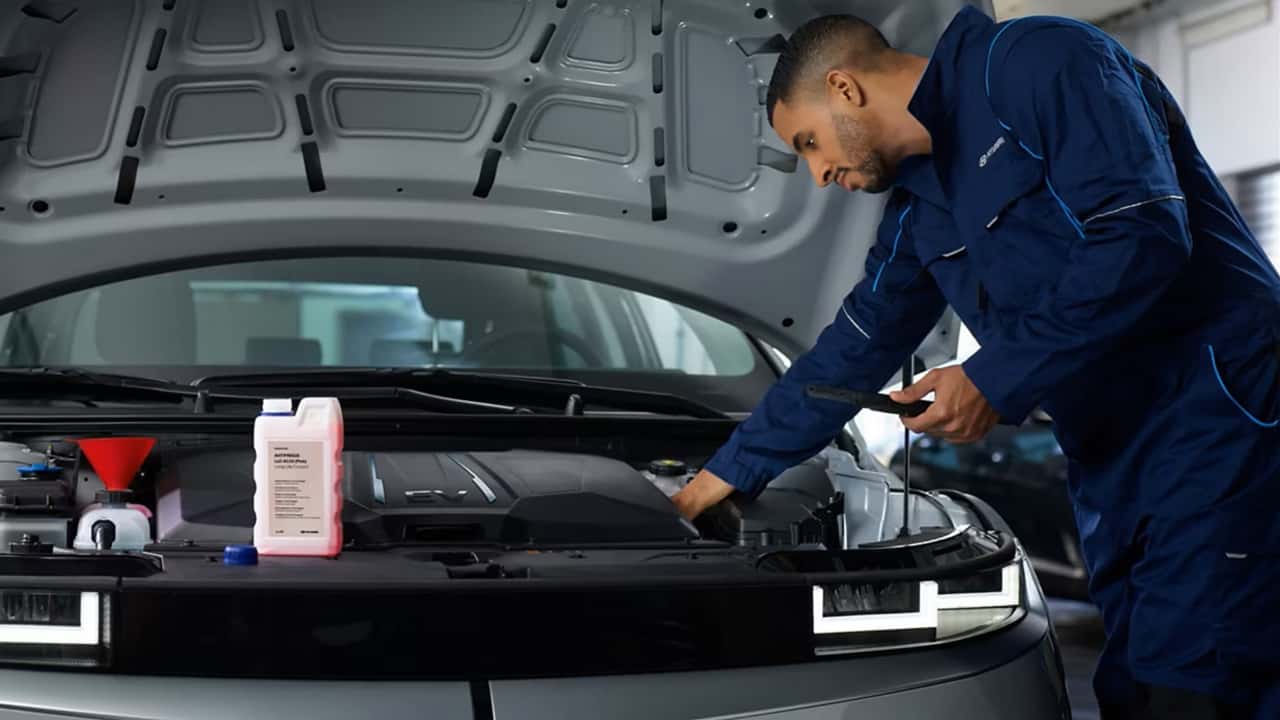
According to the brand, these mobile service units are more than just transport vehicles. Each van is specially outfitted with advanced tools, software, and on-board Dealer Management System (DMS) integrations. This ensures that the technician, although remote from the dealership building, can access the same diagnostic and service data as they would at a physical workshop. The technicians themselves are factory-trained professionals, guaranteeing that every job meets Hyundai’s quality standards.
The automaker also emphasizes that all replacement parts used during these mobile visits are genuine Hyundai components, ensuring compatibility and reliability. By maintaining the same quality standards as dealership servicing, Hyundai aims to make mobile maintenance a natural extension of the dealership experience rather than an alternative.
What Can Mobile Technicians Do?
While the mobile service fleet isn’t intended to replace full-scale dealership repair centers, the vans are fully capable of handling most routine and preventive maintenance tasks. Among the services offered are tire rotations, oil changes for combustion-engine cars, software updates, service campaigns, brake pad and rotor replacements, and even cleaning and detailing options. Essentially, if the issue doesn’t require heavy-duty workshop equipment, a mobile van can likely take care of it on-site.
This balance between accessibility and practicality is critical to making the service sustainable. Hyundai acknowledges that complex mechanical or electrical problems will still require customers to visit a dealership. However, for everyday maintenance and simpler repairs, the new mobile service solution should save time, minimize stress, and reduce vehicle downtime.
A Modern Convenience for Modern Customers
In announcing the national rollout, Hyundai Motor America’s vice president of aftersales and customer experience, Michel Poirier, described the program as part of a broader push to meet the evolving expectations of car owners. Today’s customers want efficiency, transparency, and convenience, especially in post-pandemic America, where door-to-door services have become a norm in other industries. The mobile service initiative brings that same convenience to vehicle ownership.
By enabling customers to schedule appointments online and receive service at home or at work, Hyundai is demonstrating its sensitivity to how time-strapped consumers prefer to manage their vehicle care. The company hopes this approach will not only enhance satisfaction but also improve service retention rates across dealerships.
A Competitive Move in a Changing Service Landscape
Hyundai’s expansion comes at a time when automakers are rethinking their service models. Tesla has long championed mobile service as a key differentiator, particularly important given its relatively small network of physical service centers. Rivian followed suit, integrating mobile repairs into its ownership experience from the start. Hyundai is now among the first traditional car manufacturers to scale this strategy nationally, signaling that mobile maintenance is no longer unique to electric-vehicle startups.
The decision also fits into Hyundai’s broader goal of modernizing its customer experience. Beyond the convenience factor, the automaker’s mobile services can help dealers reinforce brand loyalty and offer consistent post-sale support. It also opens new doors for data collection and efficiency improvements through connected service software.
Filling the Gap Between Convenience and Complexity
Despite its many advantages, the mobile service program is not a complete substitute for the complexities of traditional workshops. Certain advanced diagnostics, drivetrain repairs, and high-voltage EV component servicing will still require shop-level infrastructure. Hyundai advises customers with these types of problems to schedule appointments directly with their dealerships.
However, for most owners—especially those seeking routine maintenance—the mobile fleet offers a practical and convenient solution. Hyundai’s move to expand this service nationwide represents more than just a technological or logistical improvement. It’s a reflection of how the automotive industry is transforming to fit the lifestyles of its customers.
By bridging the gap between dealership-level professionalism and at-home convenience, Hyundai is redefining what car maintenance can look like in the digital age. Customers who once dreaded trips to the service department may now find the process as simple as clicking a button—and waiting in the comfort of their own driveway.
All EV Sales Research Team
5/27/2026