
 Buy & Sell
 All EV Sales
 Explore
 Account
 Back to News
 The Affordable 2027 Chevy Bolt Is Back, but Americans Still Want Bigger EVs
For years, electric-vehicle advocates have insisted that the market needs more affordable models. The return of the Chevrolet Bolt appeared to answer that demand. After the previous-generation Bolt was discontinued, General Motors revived the nameplate with a new model for 2027, promising better charging, updated technology, and a price well below most new electric vehicles.
The early sales figures, however, suggest that affordability alone may not be enough to win over American buyers.
Chevrolet sold only 4,224 Bolts during the first six months of the year. By comparison, the considerably more expensive Chevrolet Equinox EV found 16,249 buyers over the same period. The Bolt was not available for the entire period, and deliveries ramped up gradually, so supply may have played a role. Still, General Motors has already announced that Bolt production will end again, with the factory scheduled to be converted for production of gasoline-powered SUVs.
The Bolt’s weak performance reflects a broader trend. Several relatively affordable electric models—including the Nissan Leaf, the original Bolt, Hyundai Kona Electric, and Kia Niro EV—have struggled to match the sales of larger and more expensive vehicles. That is true even as consumers and industry observers continue to complain that electric cars cost too much.
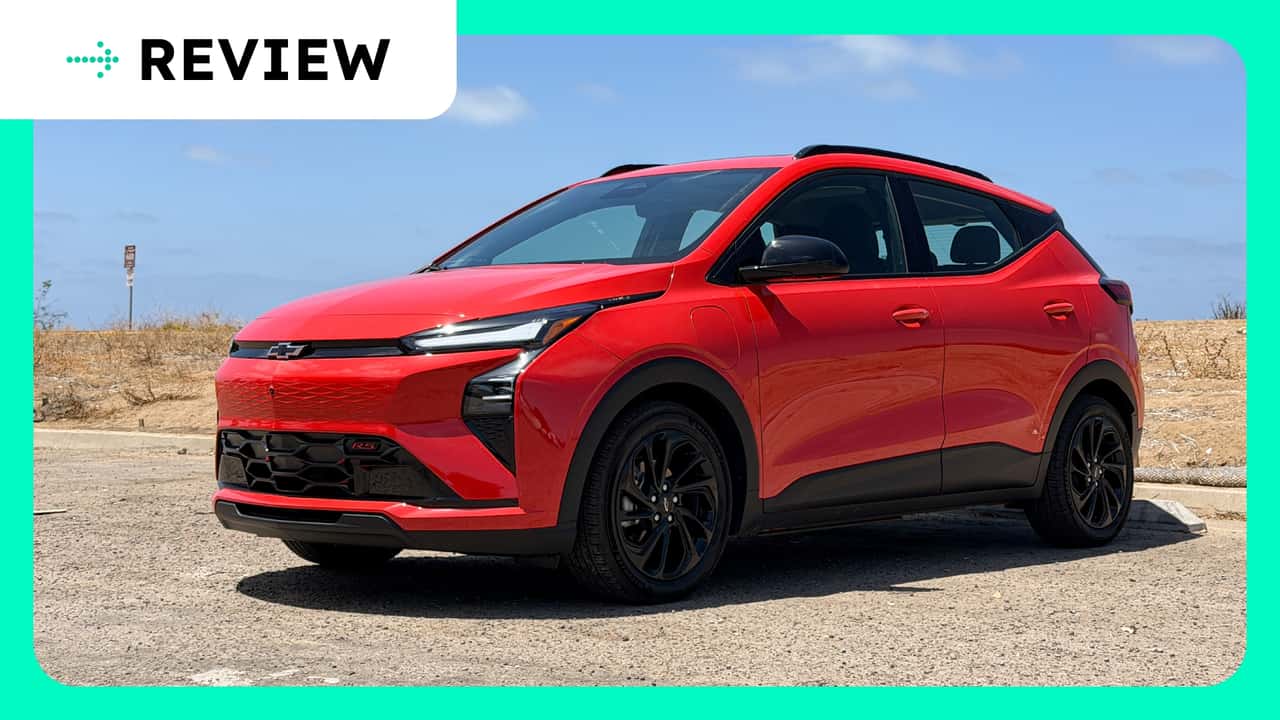
A week spent with the 2027 Bolt helps explain the contradiction. The car is practical, efficient, and far more modern than its predecessor. It also offers many of the features buyers now expect from a mainstream EV. Yet it still asks customers to accept compromises that many Americans appear unwilling to make.
A Major Improvement Over the Previous Bolt
The outgoing Bolt had several weaknesses that made it difficult to recommend as a primary vehicle. Its charging speed was slow by modern standards, making long road trips inconvenient. It also lacked sophisticated route-planning software and used older technology. The Nissan Leaf faced similar criticism, compounded by its outdated charging connector.
The 2027 Bolt addresses many of those problems. Its battery can accept up to 150 kilowatts of charging power, placing it on competitive footing with many newer electric vehicles. With an EPA-estimated range of 262 miles, it may not lead the segment, but it offers enough range for everyday use and occasional travel.
The new model also benefits from General Motors’ newer software and hardware systems. Google Maps is integrated into the vehicle, Gemini artificial-intelligence support is available, and drivers can use services such as Apple Music. Video streaming is permitted while the car is parked. Google Maps and audio services are included for eight years, after which an ongoing subscription will be required. Unlike many competing vehicles, the Bolt does not offer Apple CarPlay or Android Auto.
The cabin is more useful than before, with additional storage compartments, shelves, and places to put personal items. The design and materials are also an improvement over the earlier car. Available equipment includes Super Cruise hands-free driving assistance, 360-degree cameras, a North American Charging Standard port, route planning, and plug-and-charge capability.
In terms of performance, the Bolt is not lacking. Its electric motor produces 210 horsepower, and the immediate response typical of an EV makes it feel quick around town. It is not technologically obsolete, underpowered, or stripped of essential equipment.
The Cost of Going Small
The 2027 Bolt starts at $28,995, making it one of the least expensive new EVs available in the United States. Even a well-equipped example costs roughly $35,000, which is still substantially less than a similarly equipped Equinox EV or Hyundai Ioniq 5.
The formula is simple: a compact, front-wheel-drive electric hatchback with strong efficiency, useful interior space, and low operating costs. The Bolt can deliver close to 4 miles per kilowatt-hour in normal driving, and routine maintenance is limited largely to tires and other basic service items. Rear-seat legroom is sufficient for everyday family use and could even make the car suitable for rideshare work.
Chevrolet has raised the vehicle slightly and marketed it as an SUV, following a strategy also used with the latest Nissan Leaf. Fundamentally, though, it remains an economy hatchback rather than a traditional American crossover.
That distinction matters. The Bolt’s compact dimensions make it easy to maneuver and inexpensive to operate, but they also create noticeable sacrifices. The seats are narrow, thin, and not especially well padded. Its short wheelbase contributes to a bouncier ride, particularly over rough pavement. Passengers sit closer to the doors, the interior feels tighter, and highway wind noise is more noticeable than in larger EVs.
The car feels less refined than the Equinox EV or Blazer EV. Materials are harder and less luxurious, and the front-wheel-drive layout may be a drawback for customers who expect all-wheel drive. None of these characteristics represents a serious engineering failure. They are the predictable compromises required to keep the price low.
Americans Prefer More Vehicle Than They Need
The central challenge for the Bolt is not that it is a bad car. Rather, it is that many American buyers do not want to make those compromises. In the United States, consumers have increasingly gravitated toward larger vehicles, especially compact and midsize SUVs with all-wheel drive.
That preference helps explain why the Equinox EV outsells the Bolt, why the Hyundai Ioniq 5 regularly outsells the smaller Kona Electric, and why the Tesla Model Y became far more successful than the Model 3. It also helps explain the declining appeal of electric sedans such as the Ioniq 6.
For many households, a crossover offers the ideal balance of size, cargo capacity, seating position, and perceived versatility. Larger SUVs can become too expensive, but smaller hatchbacks and sedans often feel like an unnecessary sacrifice. Buyers may want a cheaper EV, yet they still expect a vehicle that provides generous cabin space, comfortable seats, road-trip capability, and all-wheel drive.
The Bolt demonstrates that automakers can deliver an electric vehicle with modern technology and a relatively accessible price. What remains uncertain is whether enough American consumers want that package when a larger alternative is available.
Even the people who appreciate the Bolt’s value may choose something bigger. A more spacious used electric SUV can provide better comfort and greater capability for road trips or rough roads, even if it costs more. That willingness to buy beyond actual needs is common among American drivers.
For buyers who value efficiency, simplicity, and low running costs, the Bolt remains a compelling option. But its second production run may be brief. With its factory being converted to build larger gasoline-powered SUVs, the affordable electric hatchback once again appears to be heading toward an early exit.
All EV Sales Research Team
8/25/2026