
 Buy & Sell
 All EV Sales
 Explore
 Account
 Back to News
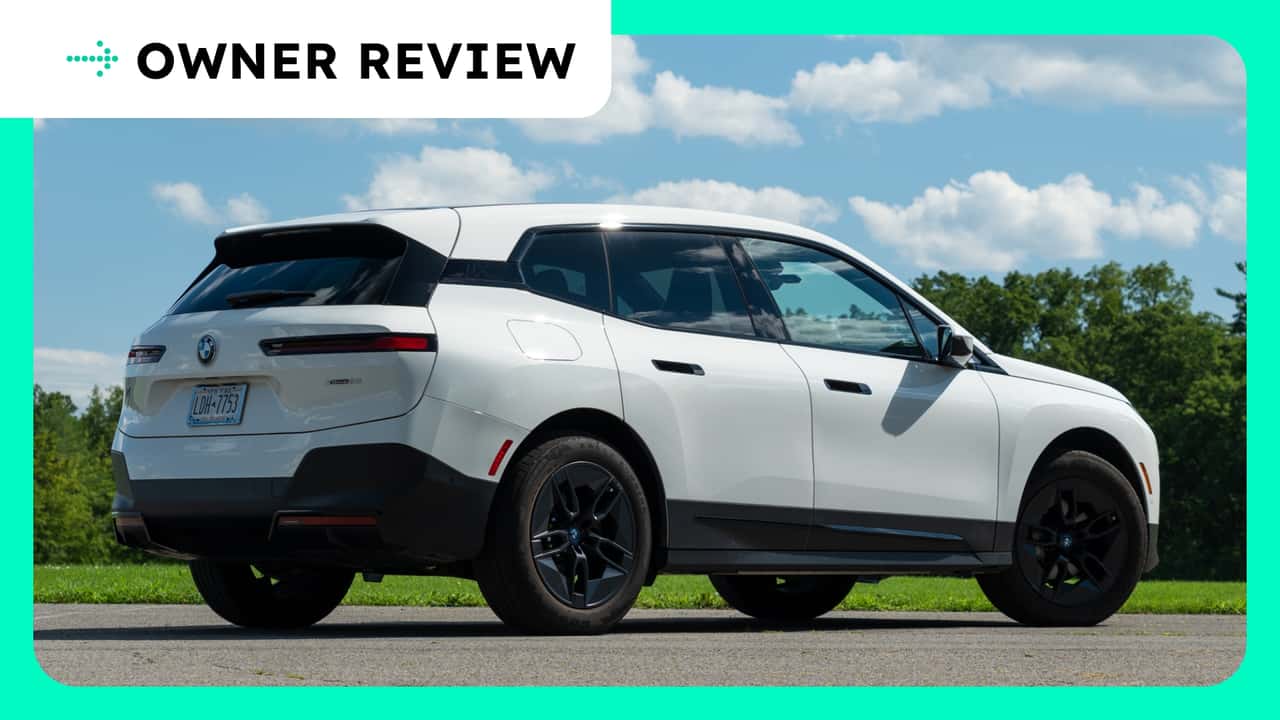
 Leasing a car is often viewed as a low-risk way to try something new. Drivers can enjoy a vehicle for a few years without taking full responsibility for its long-term depreciation or worrying about selling it later. That was the original plan for one couple who leased a 2024 BMW iX xDrive50 for 36 months.
The idea was simple: spend three years with BMW’s large electric SUV, evaluate the rapidly changing electric vehicle market, and move on to something newer when the lease ended. By the time the lease was up, however, the experience had gone so well that the couple decided to keep the iX rather than replace it.
The decision came despite the growing number of appealing electric vehicles now available. BMW’s new iX3, for example, offers a driving range of more than 400 miles and starts at roughly $60,000. Its combination of range, technology, and price makes it a strong alternative to a lightly used iX, particularly for buyers who do not require the larger SUV’s additional interior space.
Even so, the iX had established a level of familiarity and dependability that made switching less attractive. After three years, the SUV had traveled 29,301 miles, coming close to the 30,000-mile limit imposed by the lease. During that time, it experienced just one notable issue: a punctured tire. Since the damage was not caused by a mechanical defect, the vehicle was otherwise considered essentially trouble-free.
Reliability was especially important when compared with the possibility of purchasing a brand-new model built on an entirely new platform. The iX3 could prove to be dependable, but new vehicles often experience minor issues during their first production cycles. Keeping a proven vehicle eliminated that uncertainty.
Battery performance was another reason to hold on to the BMW. The owners have not found the SUV’s range limiting in everyday use. During milder weather in New York, the iX regularly displays more than 300 miles of estimated range when charged to 80 percent, which is the level they normally use. BMW’s range predictions have also remained impressively accurate in real-world driving.
According to data supplied by BMW, the battery retained approximately 99 kilowatt-hours of capacity from the 105 kWh usable capacity available when the vehicle was new. That represents roughly 5 percent degradation after three years, a strong result for an electric vehicle with several years and nearly 30,000 miles behind it.
At a full charge during summer conditions, the owners estimate that the iX can travel more than 350 miles. That is comfortably beyond the vehicle’s original EPA rating of 307 miles. Current efficiency has also been encouraging, averaging about 3.4 miles per kilowatt-hour, compared with the official rating of 2.9 mi/kWh.
Winter conditions naturally reduced those numbers. During a particularly cold January, efficiency fell to approximately 2.0 mi/kWh as temperatures remained below freezing for extended periods. By March, with conditions becoming more moderate, efficiency had climbed back to 2.6 mi/kWh.
The iX has also continued to impress in areas beyond range and reliability. Although this particular vehicle is not equipped with adaptive suspension, its ride remains comfortable on 20-inch wheels. The owners also prefer the iX’s overall interior design to the more technology-centered cabin of the newer iX3. While the newer model may offer a modern digital experience, the original iX feels more cohesive and upscale to them.
The SUV’s size has become more useful over time as well. The couple did not originally need the iX’s generous cargo area, but their dog has grown to more than 70 pounds. The additional room now makes it easier to carry the animal’s toys, equipment, and other supplies.
There are still several frustrations. The iX lacks a dedicated pet or camping mode that would allow the climate control to remain active while the driver steps away. The vehicle shuts off soon after the driver leaves, which can be inconvenient for brief stops. The rear windows are another annoyance because they open only halfway, limiting airflow for a large dog riding in the back.
The biggest ownership problem has been tire wear. After a little more than a year, the original tires were replaced with Nokian Remedy WRG5 all-weather tires. The Nokians performed much better in difficult weather, but their durability was disappointing. After about 20 months and approximately 20,000 miles, the rear tires had only 2/32 inch of tread remaining, while the front tires measured 4/32 inch.
Those tires did not meet the requirements of BMW’s Certified Pre-Owned inspection when the owners purchased the iX at the end of the lease. More frequent tire rotation might have extended their service life somewhat, but they still would not have qualified because the inspection requires BMW-approved, star-marked tires.
The owners replaced them with discounted Bridgestone Alenza tires carrying the required marking. Those tires should work well during the summer, although another winter solution will be needed. Because of the iX’s considerable weight, the owners believe it needs a more capable cold-weather tire than a typical all-season model, even in relatively light snow.
Now that mileage restrictions and per-mile lease penalties are no longer concerns, the couple plans to use the electric SUV more often, including for longer road trips. They are also considering adding a trailer hitch for a bicycle rack and a small utility trailer. A factory hitch was not installed on their vehicle and has not always been readily available for American-market iX models, but several aftermarket options now exist.
A vinyl wrap is another possibility, partly to move away from the SUV’s bright, monochrome appearance. However, the vehicle’s large size could make wrapping it an expensive cosmetic project. The owners may also eventually need to purchase an adapter for access to the North American Charging Standard network.
Despite those minor drawbacks, the experience has made the BMW iX difficult to replace. The newer iX3 and the upcoming i3 remain appealing possibilities for a future purchase, particularly as used vehicles. For now, though, keeping a car with a known history, strong battery health, comfortable driving manners, and almost no serious problems seems like the more sensible choice.
All EV Sales Research Team
8/26/2026