
 Buy & Sell
 All EV Sales
 Explore
 Account
 Back to News
 The EV Market Is Moving Beyond Batteries: Charging, Autonomy, Affordability and Everyday Adoption
The latest electric-vehicle news points to an industry entering a more complicated phase of development. Battery range and charging speed remain important, but the biggest changes are increasingly happening around the vehicle: public charging infrastructure, software, autonomous-driving hardware, manufacturing strategy, pricing, safety and the practical ways people use electric cars every day.
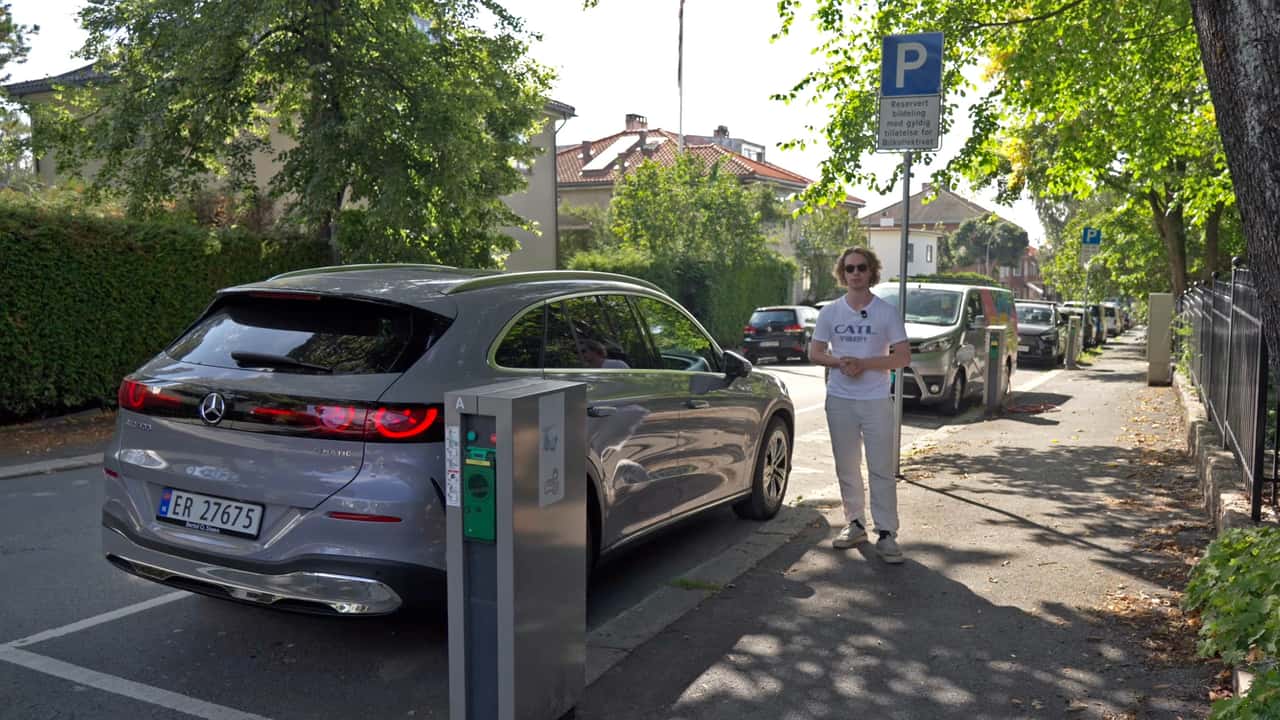
One of the clearest examples comes from Oslo, where almost half of all cars are electric. The city’s approach highlights an important lesson about EV adoption: drivers do not always need enormous charging hubs if charging is available where cars are already parked. Thousands of AC charging points installed near ordinary parking spaces allow vehicles to recharge during work, shopping or overnight stays. That model could be especially valuable in dense urban areas where many residents lack private garages.
Charging networks are also becoming more open and more widely used. BYD’s Flash Charging network has reached 10,000 stations, while roughly one-third of its users drive vehicles made by other manufacturers. That suggests charging infrastructure is gradually becoming less tied to individual brands. As more drivers depend on public charging, broad compatibility and convenient locations may matter more than the logo on the charging station.
At the same time, charging technology continues to advance. The Yangwang U7’s reported ability to charge from 10% to 97% in about nine minutes demonstrates how quickly charging performance is improving at the high end of the market. However, extremely rapid charging also raises questions about long-term battery health. Faster charging is attractive to consumers, but manufacturers must balance speed with heat management, durability and predictable battery performance over many years.
The next major EV breakthrough may therefore come from areas other than solid-state batteries. Improvements in thermal systems, charging software, manufacturing efficiency, battery chemistry, power electronics and energy management could produce meaningful gains without requiring a completely new battery architecture. Testing by TÜV Rheinland has also added independent support to Aptera’s efficiency claims, showing that aerodynamic design and low energy consumption can be just as important as simply installing a larger battery.
Affordability remains one of the industry’s biggest challenges. Tesla’s Cybercab launch is expected to generate attention, particularly because the vehicle has been associated with a potential $30,000 price point. Whether customers will actually be able to buy one at that price is uncertain. The cheapest Cybertruck, meanwhile, is now nearly twice the starting price Tesla discussed in 2019. These developments illustrate the gap that can emerge between early promises and final production economics.
Other manufacturers are trying to make electric vehicles more accessible through familiar formats. The upcoming Bolt is expected to have a limited production run, but it represents a significant improvement over its predecessor. Affordable compact EVs could be especially important as the market expands beyond affluent early adopters. Plug-in hybrids are also contributing to the transition: BMW says that including plug-in models, it has sold 3.5 million electrified vehicles. That broader category reflects the variety of paths consumers are taking toward lower-emission transportation.
Vehicle design is expanding in other directions as well. Volkswagen’s ID. California Cruise turns the retro-styled ID. Buzz into a simple camper van, with a U.S. version planned. Extended-range electric vehicles are also gaining attention, including a model that will be manufactured at Hyundai’s Alabama plant. These vehicles combine electric driving with an onboard engine or generator, potentially addressing the concerns of drivers who want electric operation without depending entirely on public charging.
Safety and software are another major theme. More than 27,000 Lucid Air sedans are being recalled because of a fire risk, although the company says the remedy can be delivered through an over-the-air update. The recall demonstrates both the risks of increasingly software-defined vehicles and the advantage of being able to fix certain problems without requiring every owner to visit a dealership.
Advanced driver assistance is developing unevenly. Volvo technology can detect deer, people and other hazards, while Tesla’s Full Self-Driving system is reported to remain surprisingly capable even when roads lose their pavement. Yet Waymo has offered a more cautious perspective: one of its leading engineers wrote that cameras alone are not enough for autonomous driving. The disagreement reflects a central debate in the field over whether highly automated driving requires additional sensors such as lidar and radar, or whether sophisticated software and cameras can eventually provide sufficient awareness.
Waymo’s planned mapping of Munich is another sign that autonomous-driving companies are expanding internationally. Mapping is an essential step before a commercial service can begin, and the company expects service to start there next year. Still, deployment will depend on regulation, weather, road complexity and the ability to handle unusual situations safely.
The feed also captures the human side of the transition. A long-term owner who expected the BMW iX to be a short-term commitment found it difficult to give up, suggesting that comfort, refinement and daily usability can create loyalty beyond technical specifications. Meanwhile, employees entering the automotive industry may discover that not everyone working for a car company is a vehicle enthusiast. That observation reinforces how broad the EV market has become: it is no longer just a niche for technology fans, but a mainstream industry affecting manufacturing, cities, software, housing and everyday transportation.
Taken together, these stories show an EV sector moving from simple promises about electrification toward the harder work of making electric mobility practical, affordable, safe and widely available. The winners will likely be determined not by one breakthrough alone, but by how successfully companies combine charging access, efficient vehicles, dependable software, realistic pricing and products that fit the way people actually live.
All EV Sales Research Team
8/31/2026