
 Buy & Sell
 All EV Sales
 Explore
 Account
 Back to News
 The EV Market Accelerates as Automakers Race Toward Autonomy, Affordability, and New Ownership Models
The latest electric-vehicle news points to an industry moving rapidly in several directions at once. Automakers are competing to make EVs more affordable and practical, technology companies are pushing autonomous driving into public use, and governments are reshaping the rules around charging and home energy. At the same time, questions about battery durability, Chinese imports, customer demand, and the real-world usefulness of increasingly sophisticated vehicle features remain unresolved.
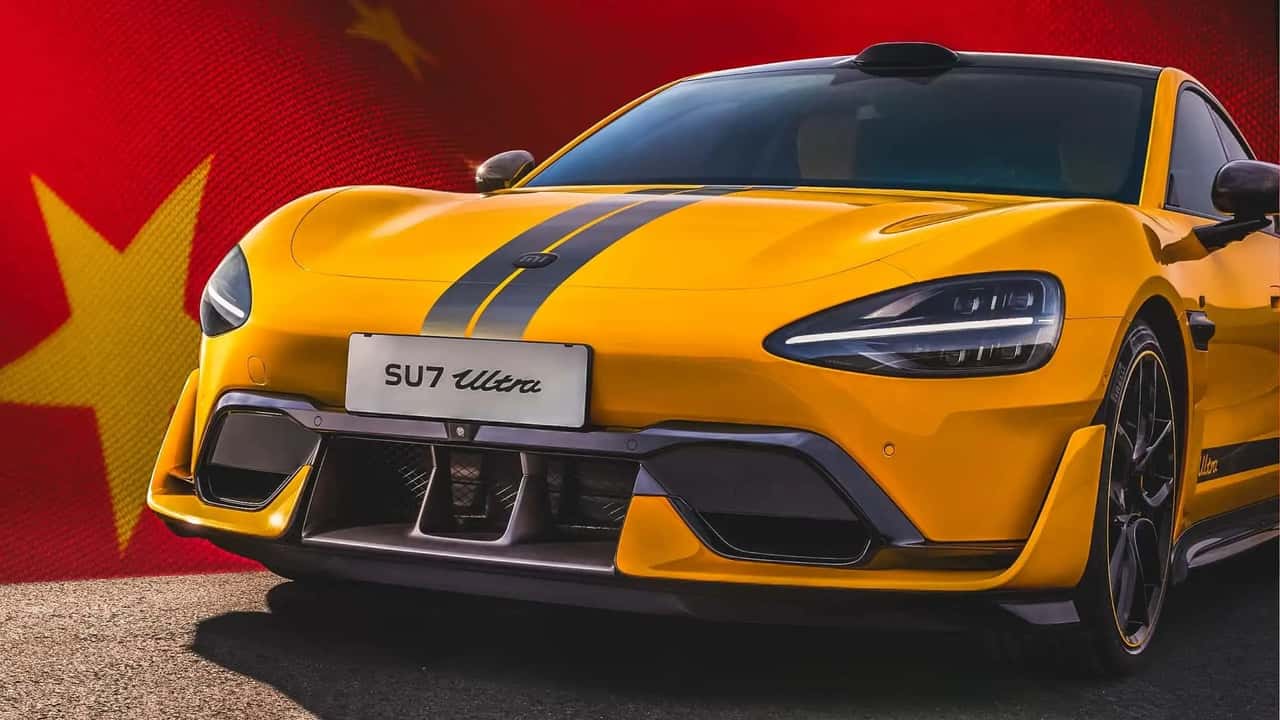
One of the clearest themes is the growing pressure to protect domestic automotive markets. A major auto industry lobbying group is asking Congress to prevent Chinese-made vehicles from entering the United States before those imports gain a meaningful foothold. The concern reflects a broader fear that Chinese manufacturers, which have developed strong expertise in battery production and affordable EVs, could challenge established American and European brands with lower-priced models. China’s influence is also visible in the expansion of its automakers overseas. Xiaomi, best known globally for consumer electronics, is preparing to enter Europe with support from eight dealership groups, signaling how quickly new players are attempting to establish local sales networks.
European markets continue to show strong consumer interest in electric cars, although the transition is uneven. In the United Kingdom, EVs have reached approximately 30% of the total vehicle market, making them the country’s most popular type of new vehicle. That milestone demonstrates that electric cars are no longer a niche product in some regions. However, adoption still depends heavily on charging access, price, and the availability of vehicles suited to different lifestyles.
Charging infrastructure remains a significant weakness. A plan to install only 100 curbside chargers by 2030 suggests that many residents without driveways or private parking will continue to face difficulty charging at home. A new law allowing tenants and residents to install plug-in solar panels without being blocked by landlords or local governments could help expand access to home-generated electricity, but it will not solve the problem for everyone. Public charging reliability is also an issue. One driver described spending 40 minutes at a company-operated fast-charging station while sitting in direct sunlight, illustrating how the charging experience can still be inconvenient even when a station is available.
Automakers are also using long-distance driving demonstrations to promote improvements in efficiency. A production-specification Skoda Peaq reportedly traveled 582 miles on a single charge by using secondary roads and careful hypermiling techniques. Such results highlight the potential of aerodynamic design, conservative speeds, and efficient driving, but they may not reflect ordinary highway use. The achievement nevertheless underscores the industry’s continued focus on extending range without requiring dramatically larger batteries.
Battery longevity is receiving closer scrutiny as EVs become more common. A study involving approximately half a million electric vehicles found Tesla near the bottom of its ranking for battery durability. The finding is especially notable because Tesla helped popularize long-range EVs and remains one of the sector’s best-known technology leaders. Battery performance varies according to climate, charging habits, chemistry, mileage, and software management, so rankings should be interpreted carefully. Still, the research suggests that brand reputation alone may not be enough to guarantee long-term ownership advantages.
Autonomous driving is another major area of development. Tesla’s self-driving taxi completed an uneventful trip in Austin without a steering wheel, pedals, or apparent human intervention. The service was launched using distinctive gold-colored two-seat vehicles, although Elon Musk was notably absent from the event. Removing conventional controls creates major engineering and regulatory challenges. Without a steering wheel or pedals, the systems controlling braking and steering must be redesigned, while passengers need new ways to interact with the vehicle and respond to emergencies.
Ford and autonomous-driving company Wayve are taking a different approach by integrating driverless technology into existing Mustang Mach-E vehicles. The first examples fitted with Wayve’s system can now be hailed in London through the Uber app. This model could make autonomous mobility easier to introduce because it uses familiar vehicle types and an established ride-hailing platform rather than requiring an entirely new service from the ground up. The success of such programs will depend on safety, public confidence, operating costs, and the ability to function reliably in crowded urban environments.
The feed also reflects a wave of experimentation in vehicle design. Concepts are presenting electric SUVs as both rugged and luxurious, while new compact models are being tailored for specific markets. An early English-language look at BYD’s kei EV describes a small vehicle that is roomy, comfortable, and thoughtfully engineered for Japan’s dense urban environment. Meanwhile, the Cupra Raval received four stars in safety testing, one fewer than recently tested Chinese rivals, showing that established European brands are facing intense competition not only on price and technology but also on safety performance.
Pickup trucks remain another battleground. Ford hopes to sell 100,000 Fathom pickups in its first year, an ambitious target in a segment where buyers expect durability, towing capability, and practicality. Although the company’s chief executive has described the Fathom as “not a pickup” with a “new silhouette,” recent images suggest that the vehicle may be more conventionally shaped beneath its camouflage than the marketing language implies. Delivery timing is also uncertain, with some customers who preordered trucks potentially receiving them in December while others wait longer.
Luxury performance is evolving as well. The Torcal is expected to accelerate faster than every Bentley before it, though Bentley says the more important achievement is the effortless way that power is delivered. That philosophy captures a broader shift in electric performance vehicles: instant torque and silent acceleration are becoming common, so refinement, control, comfort, and emotional appeal are increasingly important differentiators.
Finally, not every innovation is guaranteed to become popular. A study found that 35% of owners who purchased a new car with a passenger display have never used the screen. The finding raises questions about whether some in-car technology is genuinely useful or simply a response to the race for novelty. Overall, the latest EV developments show an industry that is expanding quickly but still searching for the right balance between advanced technology, affordability, reliability, convenience, and real-world value.
All EV Sales Research Team
9/4/2026