
 Buy & Sell
 All EV Sales
 Explore
 Account
 Back to News
 The EV Market Enters a More Complicated Phase
The latest electric-vehicle news points to an industry moving beyond a simple race to sell more battery-powered cars. Automakers, technology companies, charging providers, regulators and consumers are now confronting a more complicated set of questions: Which electric models can be produced profitably? How quickly will autonomous driving become practical? Can charging networks support themselves financially? And will hybrids slow, or perhaps reshape, the transition away from gasoline?
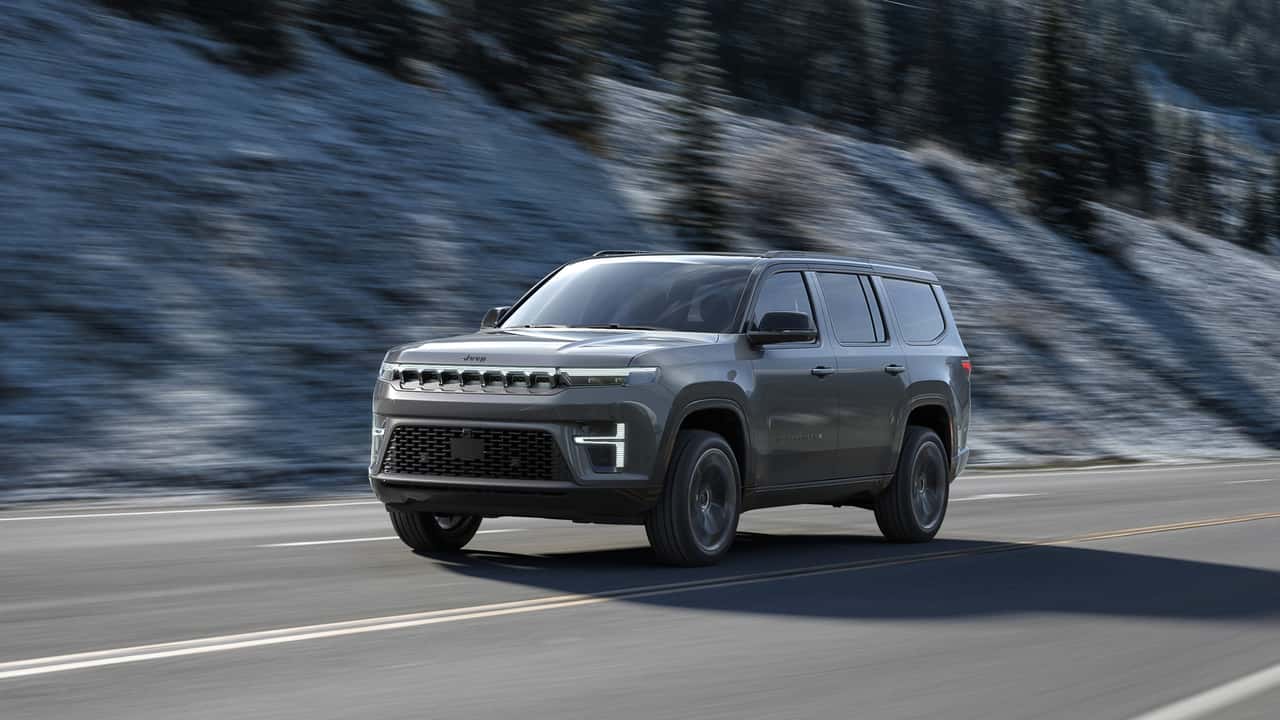
One of the clearest themes is the growing importance of electric vehicles with combustion engines used as range extenders. Jeep is reportedly preparing to begin production of its Wagoneer EREV in November, while the Ram 1500 EREV is expected next year. These vehicles are designed to drive primarily on electric power while using an engine to generate electricity when needed. Their arrival reflects the industry's effort to address consumers who want the smoothness and local emissions benefits of electric driving but remain concerned about charging access, long-distance travel and battery size.
That concern is also visible in consumer behavior. Americans are increasingly choosing hybrids as gasoline prices rise, raising questions about whether shoppers are postponing a full transition to battery-electric vehicles. Hybrids can offer better fuel economy without requiring new charging habits, making them an attractive compromise. At the same time, the United Kingdom is providing a striking counterexample: electric vehicles reportedly account for about 30% of its market, making them the country's most popular vehicle type. The contrast suggests that EV adoption depends heavily on incentives, infrastructure, regulation, vehicle availability and local consumer priorities rather than on technology alone.
Autonomous driving remains another major area of attention. Tesla's Cybercab launch represents a significant test for a company that has spent years promising self-driving vehicles. The two-seat vehicle has no steering wheel or pedals, requiring a fundamentally different approach to braking and steering. Early service in Austin reportedly included a trip without apparent human intervention, while gold-colored vehicles began operating after a launch event notable for Elon Musk's absence. Federal officials were already examining the vehicle soon after its debut, underscoring the regulatory scrutiny that will accompany any attempt to put fully driverless cars on public roads.
Other demonstrations offer a glimpse of how autonomous systems are being judged in practice. One vehicle reportedly navigated difficult Brussels traffic while the occupants remained off the controls, including during a maneuver they described as illegal. Such incidents highlight both the promise and the challenge of automated driving. A system may appear capable in complex environments, but safety depends on how it handles ambiguous road rules, unusual behavior and situations that human drivers might interpret differently. The competition surrounding robotaxis is therefore not only about launching a vehicle, but also about proving reliability, accountability and public trust.
Charging infrastructure is facing a similarly important reality check. Ultra-fast chargers attract attention because they promise shorter stops, yet the companies installing them will struggle to survive if stations do not generate sustainable returns. A report of a lengthy wait at a public fast-charging station, with the driver spending 40 minutes in the sun, illustrates the gap that can exist between advertised capability and the actual user experience. Charger reliability, location, pricing, maintenance and utilization will matter as much as peak charging speed. A large network that loses money indefinitely cannot provide a dependable foundation for mass adoption.
Competition is also expanding geographically. Eight dealership groups have reportedly joined Xiaomi's European entry, scheduled to begin next year. Chinese automakers continue to seek international growth, while a major American auto-industry lobby group is asking Congress to prevent Chinese imports before they become established. These developments reveal an emerging tension between consumer choice and national industrial policy. New entrants can bring lower prices, fresh designs and rapid technological development, but governments and domestic manufacturers are concerned about supply chains, data security, subsidies and the future of local production.
Product variety is growing alongside international competition. A production-specification Skoda Peaq reportedly traveled 582 miles on one charge through a combination of secondary-road driving and hypermiling. That result demonstrates the potential of efficient vehicle design, though real-world range will vary with speed, temperature, terrain, payload and driving style. BYD's kei-sized electric vehicle is also attracting attention for its roomy interior, comfort and thoughtful engineering, particularly in Japan's compact-car market. Meanwhile, the high-performance Torcal is expected to accelerate faster than any Bentley before it, although Bentley emphasizes effortless delivery rather than headline figures.
Software is becoming a major differentiator as well. Rivian's latest update for older R1 vehicles adds new features to an existing fleet, showing how manufacturers can extend a vehicle's capabilities after it leaves the factory. Yet software-led ownership also brings questions about updates, feature availability, cybersecurity and whether older hardware can keep pace with newer models.
Finally, changes beyond the vehicle itself could influence adoption. A new law reportedly prevents landlords and local governments from blocking residents and tenants from installing plug-in solar panels. Linking distributed solar generation with home charging could help some households reduce energy costs and become less dependent on conventional electricity sources, although access will vary by housing type and local conditions.
Taken together, these stories describe an EV sector entering a more pragmatic phase. The central challenge is no longer simply proving that electric propulsion works. It is building an ecosystem that is affordable, profitable, convenient, safe and adaptable. Hybrids may serve as a bridge for hesitant buyers, range-extender vehicles may broaden electric driving, autonomous cars will face intense scrutiny, and charging companies will need viable business models. At the same time, global competition and policy decisions will shape which technologies and manufacturers gain lasting influence. The next stage of the transition will be defined less by a single breakthrough than by how successfully all of these pieces work together.
All EV Sales Research Team
9/6/2026