
 Buy & Sell
 All EV Sales
 Explore
 Account
 Back to News
 The EV Market Enters a More Complicated Phase of Growth
The latest developments across the electric-vehicle industry show a market moving beyond its early period of simple enthusiasm. Battery-powered cars continue to gain ground, new models are becoming more efficient and capable, and autonomous driving is moving from demonstration videos into limited public operation. At the same time, manufacturers, charging companies and policymakers are confronting difficult questions about profitability, reliability, regulation and consumer demand.
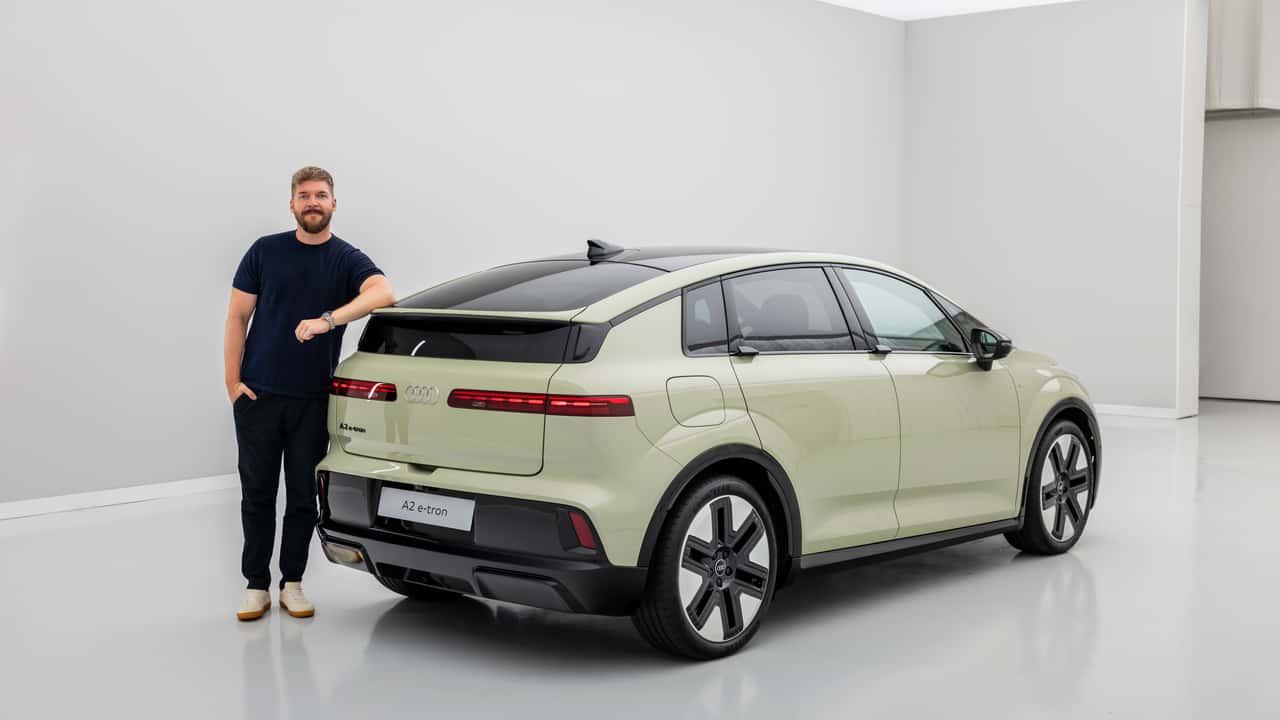
One of the clearest themes is that electric vehicles are becoming more diverse. The new A2 is presented as a successor that maintains the efficiency and unconventional styling associated with its predecessor, suggesting that manufacturers are no longer treating EVs merely as replacements for familiar gasoline cars. Instead, designers are using electric platforms to experiment with aerodynamic shapes, compact packaging and distinctive visual identities. Similar thinking is visible in the development of smaller vehicles for specific markets. An early English-language look at BYD’s kei-sized electric car describes a roomy and comfortable vehicle engineered for Japan, where narrow roads, dense cities and limited parking reward compact dimensions.
Long-distance efficiency remains another major focus. A production-spec Skoda Peaq reportedly covered 582 miles on a single charge by using secondary roads and hypermiling techniques. Such a result may not represent ordinary driving, but it highlights the continuing importance of energy consumption. Automakers are competing not only to install larger batteries, but also to reduce the amount of energy required to move a vehicle. The distinction matters because efficiency can lower purchase costs, reduce charging time and make electric vehicles less dependent on very large battery packs.
Charging infrastructure, however, remains a business challenge. Ultra-fast chargers attract attention because they promise to make electric vehicles more convenient on long trips, yet the equipment is expensive to install and operate. The latest reports raise a basic question: can charging companies earn enough revenue to justify continued expansion? A charger that is technically impressive but rarely used may struggle financially, while a busy station still faces high electricity, maintenance and real-estate costs. The industry’s next stage will therefore require more than faster charging speeds. It will require sustainable business models and reliable locations that drivers can actually depend on.
The economics of ownership are also being tested by changing fuel prices. Many Americans are turning toward hybrids as gasoline becomes more expensive, prompting renewed debate over whether fully electric vehicles can maintain momentum. Hybrids offer a familiar compromise: they can reduce fuel consumption without requiring drivers to change their routines around charging. EV advocates, meanwhile, must continue demonstrating that battery-powered cars make financial and practical sense over the full ownership cycle. Purchase prices, insurance, battery durability, charging access and resale values all influence that calculation.
Battery longevity is especially important. A study involving roughly half a million electric vehicles reportedly placed Tesla near the bottom of the rankings for battery durability. Such findings can influence public confidence because battery replacement is one of the most expensive potential repairs associated with an EV. Results from large studies should be interpreted carefully, since vehicle age, climate, charging habits, software management and model mix can all affect battery health. Nevertheless, the broader lesson is clear: manufacturers will increasingly be judged by how well their vehicles perform after many years, not only by their launch specifications.
Software is becoming a major way for manufacturers to support older vehicles. Rivian’s newest update for its earlier R1 fleet adds features to vehicles already on the road, demonstrating how connected cars can gain capabilities after purchase. Over-the-air updates can improve functionality, correct problems and extend the useful life of a vehicle. They can also create new expectations among customers, who may begin to view software support as a core part of ownership rather than an optional benefit.
Autonomous driving remains the most dramatic and controversial part of the news. Tesla’s Cybercab has entered public discussion as a vehicle designed without a steering wheel or pedals, requiring a fundamental rethink of braking and steering controls. Early autonomous taxi trips in Austin were described as uneventful, while another demonstration reportedly navigated difficult Brussels traffic, including a maneuver passengers considered illegal. These examples illustrate both the promise and the sensitivity of driverless technology. A smooth trip can build confidence, but every unusual road situation raises questions about responsibility, safety and how the system interprets local rules.
The Cybercab launch has also drawn immediate federal scrutiny, underscoring that autonomous vehicles do not operate in a regulatory vacuum. The technology must satisfy transportation authorities, safety investigators and policymakers who may not agree on how quickly it should be deployed. The absence of a conventional driver changes the meaning of accountability: when something goes wrong, responsibility could involve the vehicle owner, operating company, software developer or manufacturer.
Competition is expanding across the wider market as well. Xiaomi is preparing an entry into Europe with support from eight dealership groups, while Chinese imports are facing opposition from a major American auto-industry lobby. These developments point to a growing geopolitical dimension in the EV race. Companies are competing not only on range and price, but also on market access, trade policy and production location.
At the premium end, the Torcal is positioned as a model capable of out-accelerating every Bentley before it, although its maker argues that performance figures matter less than the ease with which the power is delivered. That philosophy reflects a broader shift in electric performance cars: instant acceleration is becoming common, so refinement, control and effortless speed may now be more meaningful differentiators.
Taken together, the feed portrays an EV industry that is still advancing but has entered a more demanding phase. Efficiency, charging economics, battery life, software support, autonomous safety and international competition are becoming just as important as headline range or acceleration. Electric vehicles are no longer being evaluated solely as futuristic products. They are being judged as long-term transportation systems—and the companies that succeed will be those able to make the technology dependable, affordable and financially sustainable.
All EV Sales Research Team
9/7/2026