
 Buy & Sell
 All EV Sales
 Explore
 Account
 Back to News
 2027 Mercedes-Benz GLC Electric Review: A Major Step Forward for Mercedes EVs
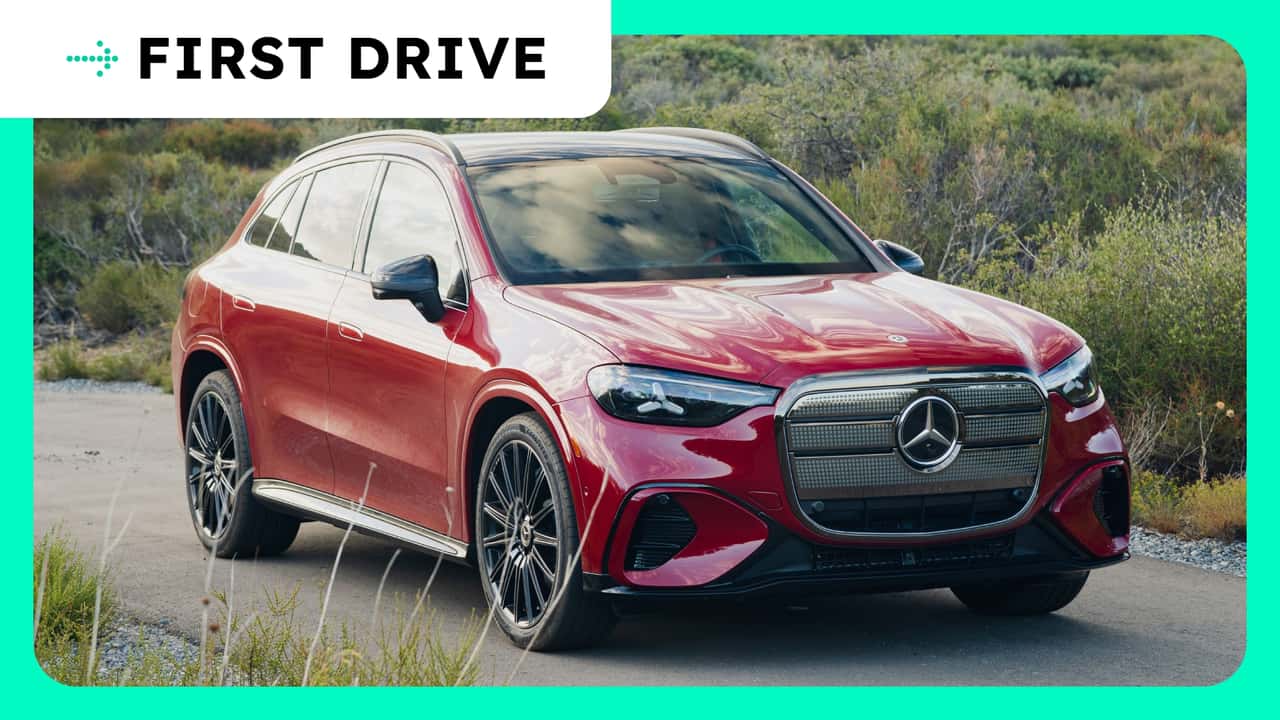
Mercedes-Benz has introduced several electric vehicles in recent years, but the new GLC Electric may be the model that matters most. Unlike the company’s earlier EQ products, which often struggled to combine attractive design, competitive efficiency, and strong software, the electric GLC brings those elements together in a much more convincing package.
The GLC Electric is built on Mercedes’ new MB.EA platform, a dedicated architecture designed for the company’s next generation of battery-powered vehicles. The same technology will eventually support an electric C-Class, while the smaller CLA Electric uses related systems on a platform that can also accommodate hybrid powertrains. The GLC is especially important in the United States, where crossover demand remains much stronger than demand for luxury sedans.
Strong performance and impressive range
The tested model was a GLC 400 4Matic Electric, an all-wheel-drive crossover producing 483 horsepower and 590 pound-feet of torque. Mercedes estimates a 0-to-60-mph time of 4.2 seconds, and the vehicle feels every bit as quick in everyday driving. Acceleration is immediate at nearly any speed, yet the power delivery does not make the chassis feel unsettled.
The electric GLC also benefits from a two-speed gearbox on its rear motor. That system is intended to improve efficiency during high-speed cruising, while the front motor can disconnect from the wheels when it is not needed. Together, those features help the GLC deliver strong highway efficiency without sacrificing all-wheel-drive performance when extra traction is required.
Range is another major strength. The tested vehicle, fitted with large 21-inch wheels and Goodyear Eagle F1 performance tires, carries an EPA rating of 350 miles. Models with smaller wheels can reach as much as 380 miles, while future rear-wheel-drive GLC 300 versions are expected to exceed 400 miles on a charge.
That gives Mercedes a compelling response to one of the biggest concerns among luxury EV shoppers: paying a premium for a vehicle that still requires frequent charging. The GLC’s range figures are competitive with the best vehicles in its class and should make long-distance travel significantly easier.
Extremely quick DC charging—under the right conditions
The GLC Electric uses an 800-volt electrical system and proved capable of very rapid charging at a high-output CCS station. During testing, the battery went from 15% to 80% in approximately 20 minutes and 30 seconds, reaching a peak of 350 kilowatts. Mercedes says the vehicle can accept up to 360 kilowatts, and the charging curve remained strong as the battery filled.
However, charging compatibility is more complicated when using Tesla Superchargers. The GLC comes with a native NACS connector for DC charging, allowing it to connect directly to compatible Supercharger locations. The problem is that most existing Superchargers operate at lower voltages than the Mercedes’ 800-volt system. As a result, the vehicle must use an onboard voltage booster, which greatly reduces charging speed.
At one Supercharger capable of delivering up to 325 kilowatts, the GLC reached only 83 kilowatts. The vehicle estimated that a 12%-to-80% session would take 47 minutes. That is a substantial disadvantage compared with the car’s performance at a modern 800-volt charging site.
There is also an unusual split between charging ports. The NACS connector handles DC fast charging only, while AC charging continues to use the traditional J1772 port. Owners can charge at home without changing their existing equipment, but they will need an adapter to use Tesla Destination Chargers or other AC facilities equipped with NACS plugs.
A refined and confident driving experience
On the road, the electric GLC feels more polished than Mercedes’ previous battery-powered models. Its suspension tuning, steering weight, and body control give it the composed character expected from a premium crossover. It remains quiet and comfortable in city traffic, yet it is also capable on winding roads and rougher surfaces.
Optional rear-wheel steering makes the crossover feel more agile in tight spaces and on narrow forest roads. The all-wheel-drive powertrain provides effortless acceleration, while the electric drivetrain eliminates the vibration and noise associated with a small gasoline engine. The result is a more relaxed cabin and a smoother overall experience.
The GLC faces increasingly capable competitors, including the Rivian R2, Volvo EX60, and BMW iX3. Those vehicles bring their own strengths, but the Mercedes stands out for combining long range, rapid charging, luxury appointments, and traditional driving refinement in one package.
A technology-heavy interior
Mercedes has filled the GLC with equipment. Available features include massaging and ventilated seats, automatic parking assistance, video streaming, games, multicolor ambient lighting, a Burmester sound system with Dolby Atmos, and an AI-enhanced voice assistant. The system can draw on services from Google, OpenAI, and Microsoft to answer questions about destinations, charging stops, and vehicle functions.
An optional 39.1-inch Hyperscreen stretches across much of the dashboard. It provides sharp graphics, extensive customization, and a large amount of functionality. The system is generally easy to understand, but the heavy dependence on touch controls creates some frustrations.
There are no dedicated physical controls for several basic functions. Changing tracks requires a screen tap, and the relevant button can disappear behind another menu or pop-up. Climate controls are also integrated into the display. Although temperature adjustments remain visible along the bottom of the screen, changing fan speed can be slow and may require opening a deeper menu.
The cabin is otherwise quiet, comfortable, and upscale. Mercedes adds illuminated stars throughout the interior and exterior, including the roof glass, lighting elements, and grille. The styling is certainly dramatic rather than restrained, but buyers seeking a clearly recognizable luxury vehicle will find plenty of visual distinction.
Driver assistance still needs work
The GLC introduces Mercedes’ newest MB.Drive driver-assistance system, which uses NVIDIA hardware and is expected to support more advanced supervised, point-to-point driving in the future. At launch, however, the system remains relatively limited.
It can maintain speed and lane position, perform automatic lane changes, and manage stop-and-go traffic. Yet it is not always as confident on high-speed freeway curves, and its operation feels less polished than Mercedes’ earlier assistance technology in the EQE and EQS. It also remains behind Tesla’s Full Self-Driving system and General Motors’ Super Cruise in overall capability.
Mercedes says software updates will significantly expand the system’s abilities, but the timing and eventual performance remain uncertain.
Pricing and verdict
The GLC 400 4Matic Electric starts at $64,950, while the heavily equipped test vehicle reached $89,270. A Pinnacle Plus package adds features such as the illuminated panoramic roof, advanced matrix headlights, cooled and massaging front seats, the Hyperscreen, heated rear seats, and the Burmester audio system. That package alone costs $6,800.
At its base price, the GLC already offers strong range, quick charging, a refined interior, and impressive performance. However, the vehicle feels truly luxurious only after several expensive options are added. At nearly $90,000, it approaches the price of larger electric SUVs while offering dimensions and practicality closer to smaller competitors.
Even so, the GLC Electric represents Mercedes’ strongest EV effort yet. It is efficient, fast, comfortable, technologically ambitious, and genuinely enjoyable to drive. Charging through older Supercharger hardware and the unfinished driver-assistance system are notable weaknesses, but neither erases the crossover’s broader strengths. As Mercedes expands this architecture into additional models, the GLC suggests that the company’s electric lineup is finally moving in the right direction.
All EV Sales Research Team
9/15/2026