
 Buy & Sell
 All EV Sales
 Explore
 Account
 Back to News
 The electric-vehicle market moves from promise to pressure
The latest wave of electric-vehicle news shows an industry entering a more complicated phase of development. EVs are no longer defined solely by new model launches or ambitious sales targets. The conversation is broadening to include battery durability, charging infrastructure, manufacturing scale, software, vehicle efficiency, autonomous driving, supply chains and the changing economics of ownership.
Taken together, the stories point to a market that continues to expand even as automakers face delays, recalls, weaker-than-expected consumer enthusiasm in some segments and the removal of major government incentives. Electric vehicles are gaining market share, but the transition is becoming less straightforward than many industry forecasts suggested only a few years ago.
Battery technology is becoming a measure of trust
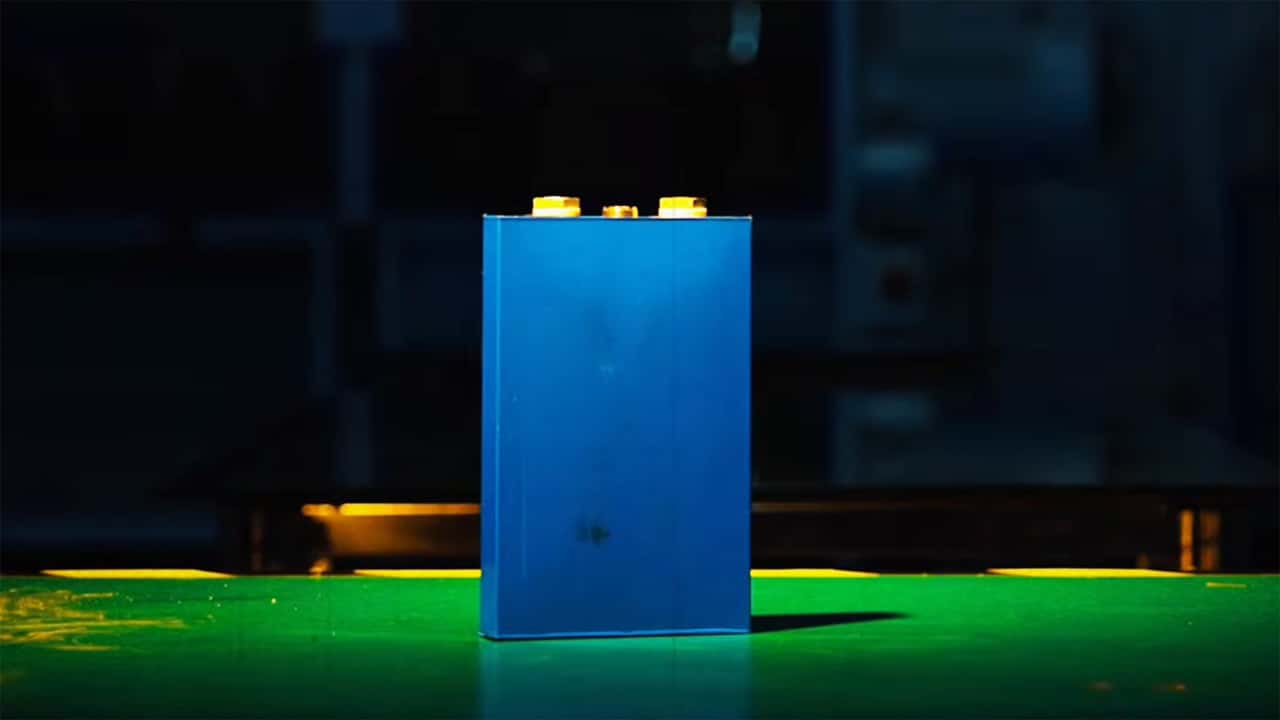
One of the most significant developments concerns the long-term durability of large battery systems. CATL supplied the cells for what was described as the world's first large-scale battery energy storage project, and fourteen years after its installation, none of those cells has reportedly needed replacement. Although stationary storage is different from the batteries used in passenger vehicles, the example is important because it highlights how far battery reliability has advanced.
For EV buyers, battery longevity remains one of the most important concerns. A battery that can retain useful capacity for well over a decade can improve resale values, reduce ownership anxiety and lower the environmental cost of replacing vehicles. The growing use of lithium-iron-phosphate batteries, including in Nissan's new small city car, also suggests that automakers are prioritizing durability, safety and cost alongside maximum range.
The broader supply chain is evolving as well. MP Materials is nearing production at its rare-earth magnet factory, a development with implications beyond any single vehicle. Domestic production of magnets could help reduce dependence on overseas supply chains and make electric-motor manufacturing more resilient. However, building a factory is only part of the challenge. The facility must achieve consistent quality, competitive pricing and high production volumes before it can meaningfully change the market.
Charging and efficiency are becoming competitive advantages
Charging infrastructure is moving from a supporting service to a major part of the EV ownership experience. Geely's 2.2-megawatt charger represents the industry's pursuit of dramatically faster charging, even if such power levels are currently more relevant to commercial vehicles or specialized applications than ordinary passenger cars. Faster charging can make electric vehicles more practical, but it also requires substantial grid capacity, compatible batteries and careful thermal management.
Home charging is receiving attention too. Customers may be able to receive a Level 2 charger costing $1,999 along with monthly account credits for allowing their vehicle or home system to help balance the electrical grid. This model points toward a future in which EV owners are not only consumers of electricity but also participants in energy management. If utilities can reward drivers for charging at favorable times or supplying power when demand is high, ownership costs could fall while the grid becomes more flexible.
Efficiency remains equally important. An average result of 8.76 miles per kilowatt-hour is astonishing by current passenger-vehicle standards and demonstrates how much range can be gained through aerodynamics, low weight and efficient powertrains. Real-world testing also continues to challenge official figures. One vehicle exceeded its claimed range in a highway test despite not being the most efficient model in the comparison, reminding buyers that laboratory ratings do not always predict every driving scenario.
Automakers are balancing ambition with reality
Several manufacturers are adjusting their product plans. Volkswagen's current-generation ID.4 is nearing the end of its U.S. run, and dealers are being encouraged to clear inventory. The company's electric van has also been delayed again, with its return now expected as a 2028 model. These changes reflect the difficulty of matching production schedules, software development, customer demand and profitability in a rapidly changing market.
The North American EV strategy of another major automaker suffered another setback during the week, reinforcing the idea that electrification plans are difficult even for established companies with enormous resources. At the same time, Tesla has finally begun volume production of the Semi, roughly a decade after the truck was revealed. The timing may be favorable: electric freight vehicles are attracting interest from fleets seeking lower operating costs, especially on predictable routes where charging can be planned in advance.
The disappearance of the federal EV tax credit in some markets adds further pressure. Manufacturers are responding with discounts, financing offers and other incentives designed to keep vehicles moving without direct government support. These deals may stimulate short-term demand, but they also raise questions about whether EVs can achieve broad affordability once promotional pricing ends.
Consumer interest is uneven, but the transition continues
Political identity appears to be less decisive in EV buying intent than commonly assumed. Republicans and Democrats show surprisingly similar levels of interest, while older consumers, particularly Boomers, appear more resistant. That pattern suggests the obstacle may be less about partisan ideology and more about familiarity, perceived inconvenience, purchase price and concerns about charging or technology.
Hybrid vehicles remain an important bridge. Toyota continues to dominate that market, but competitors are expanding their hybrid offerings rapidly. The continued popularity of hybrids shows that many drivers want improved fuel economy without giving up quick refueling, long-distance flexibility or the familiarity of combustion engines. As a result, the transition is not moving in a straight line from gasoline vehicles directly to fully electric cars. Hybrids, plug-in hybrids and battery-electric models are competing for overlapping groups of buyers.
Software, autonomy and design broaden the EV experience
Vehicle software is becoming a more visible differentiator. Volkswagen's new feature allowing owners to use smartphones as game controllers illustrates how automakers are treating parked vehicles as digital spaces rather than simply transportation devices. These features may seem secondary, but they reflect a wider effort to make cars more connected and entertaining while waiting to charge.
Autonomous-driving technology is also producing measurable results. After 271 million driverless miles, Waymo reported that its vehicles were involved in 82% fewer injury-causing crashes than human drivers. Such statistics do not eliminate the need for scrutiny, and autonomous systems still face regulatory, operational and ethical challenges. Nevertheless, large-scale real-world data can help move the discussion beyond speculation and toward evidence-based comparisons.
Design remains a powerful part of the transition. Bentley's opulent Torcal midsize SUV marks the luxury brand's entry into the electric era, while Nissan's small, appealing city car shows the opposite end of the market. Together, they demonstrate that electrification is spreading across vastly different vehicle categories, from premium SUVs to compact urban transportation.
Reliability and execution will define the next stage
The recall of nearly 99,000 Rivian vehicles, including some newer R2 models, because of a camera-related safety problem is a reminder that rapid innovation can bring quality-control risks. Advanced cameras and software are central to modern driver assistance, but a fault in those systems can affect safety and consumer confidence.
The central message of this week's news is that EV adoption is continuing, but success will depend less on headlines and more on execution. Durable batteries, affordable charging, efficient vehicles, reliable software, dependable manufacturing and clear value for consumers will determine which technologies become mainstream. The industry is no longer proving that electric vehicles are possible. It is now competing to show that they can be practical, profitable and trustworthy at scale.
All EV Sales Research Team
9/26/2026